In early 2027, FIELD STATION is planning to host a Digital Sovereignty Unconference in Newcastle-upon-Tyne. Sign up here for updates and to get involved!
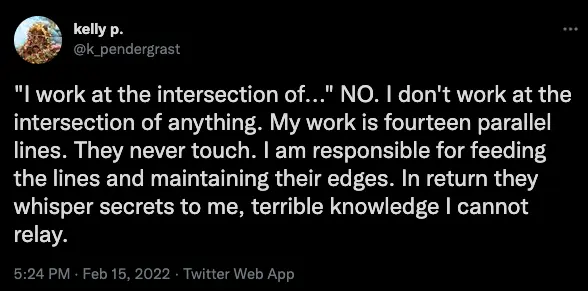
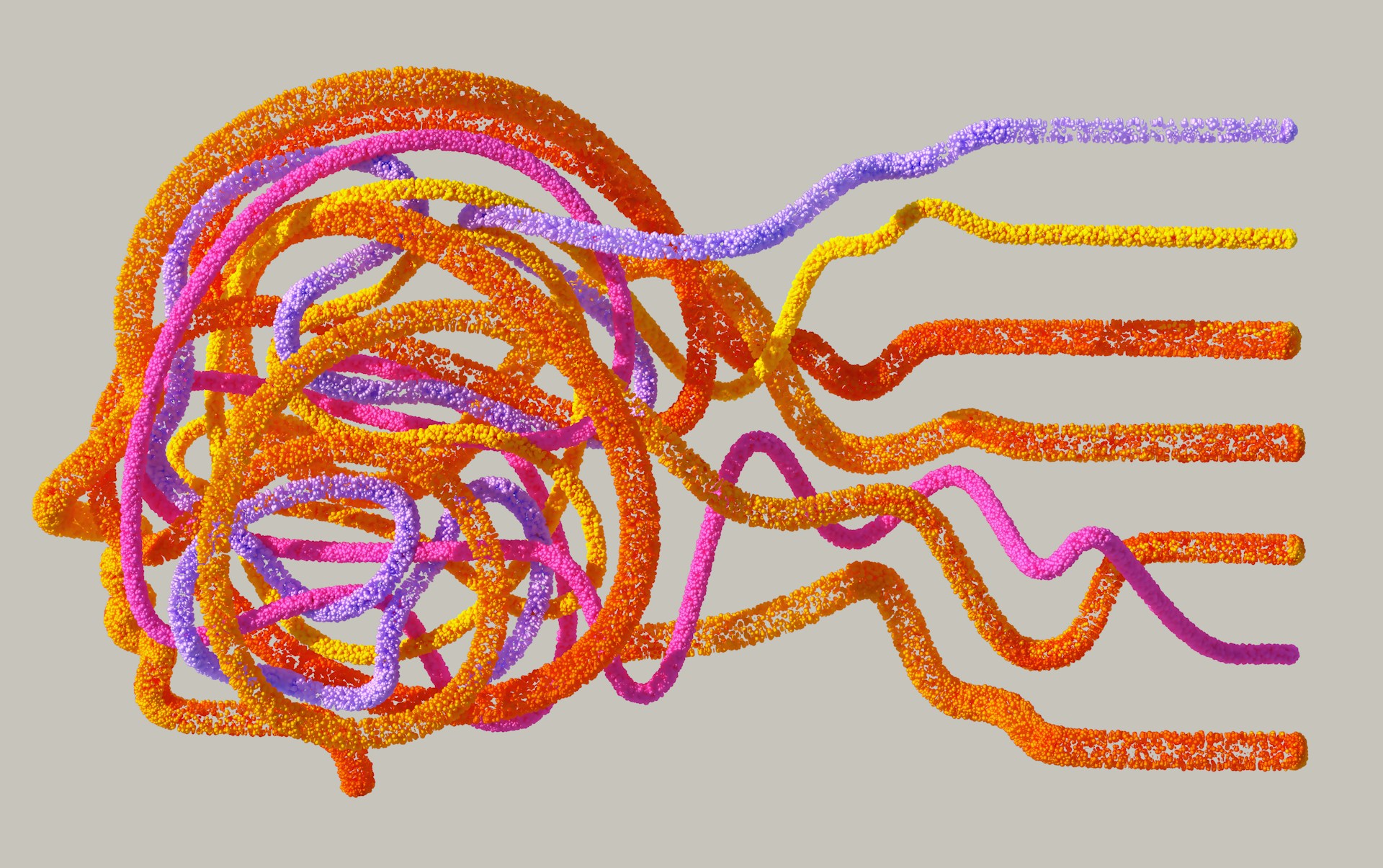
Doug discusses the idea that working at the 'intersection' of different fields can be a limiting concept, instead suggesting that his work is more akin to maintaining multiple parallel lines that whisper secrets to him. He draws on his background in Philosophy, History, Education, and Systems Thinking to argue that everything is constructed and that our understanding of the world is subjective. Doug concludes that this realisation is liberating, allowing individuals to define themselves however they like.
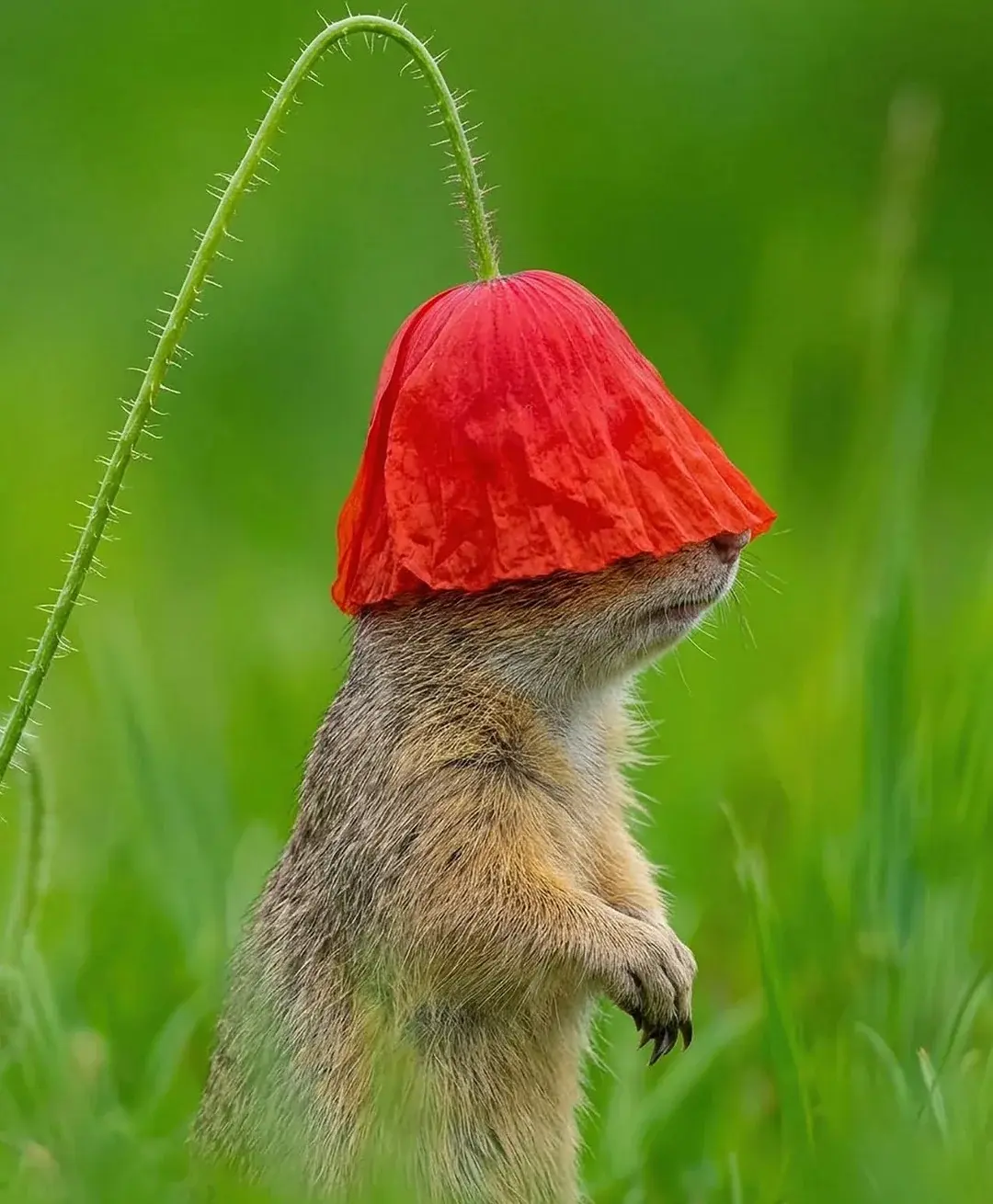
Doug discusses the theme of hats, sharing two images that complement each other well. One image features a social media post about the difficulties of wearing a hat as someone who doesn't usually wear them, while the other shows a squirrel wearing a poppy flower as a hat. These images are presented together to create an interesting visual comparison.
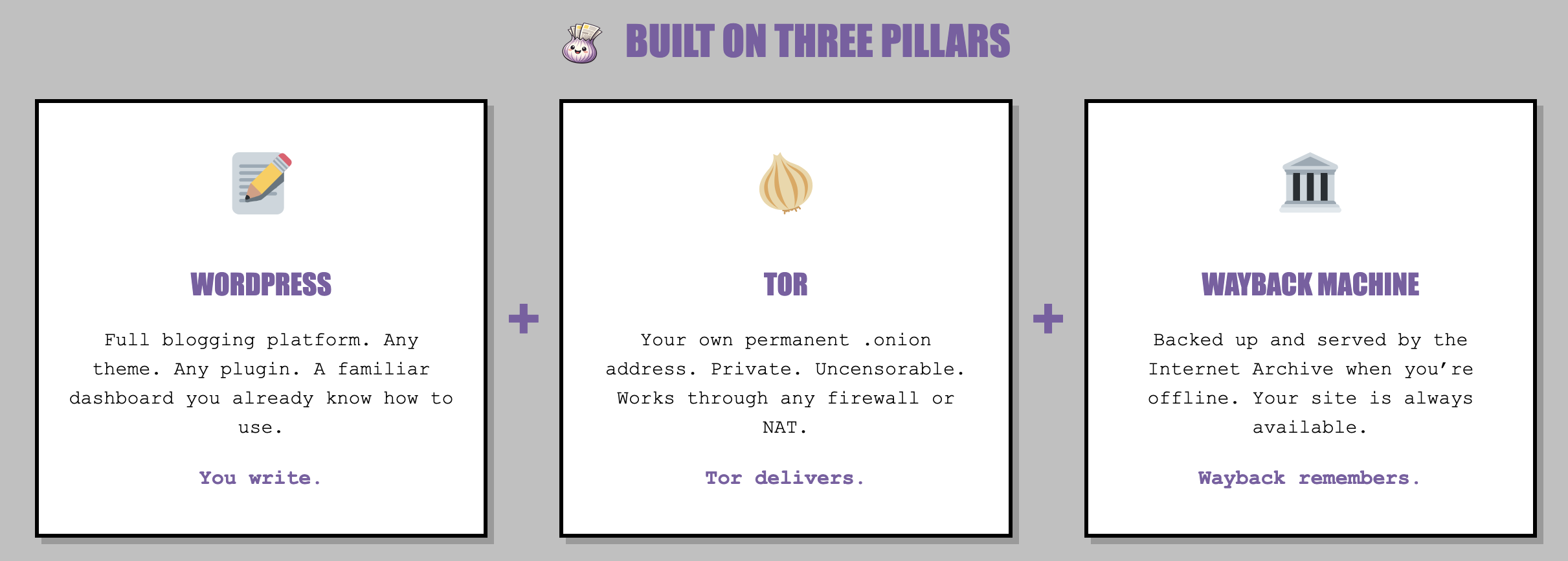
Doug has explored the concept of creating an 'untakedownable' blog, previously attempting to do so in 2017. He is now interested in OnionPress, a project that enables users to create a censorship-resistant blog with its own permanent address, free from hosting companies and monthly bills. Doug sees the value in having such censorship-resistant tools available, even if not for everyday use.
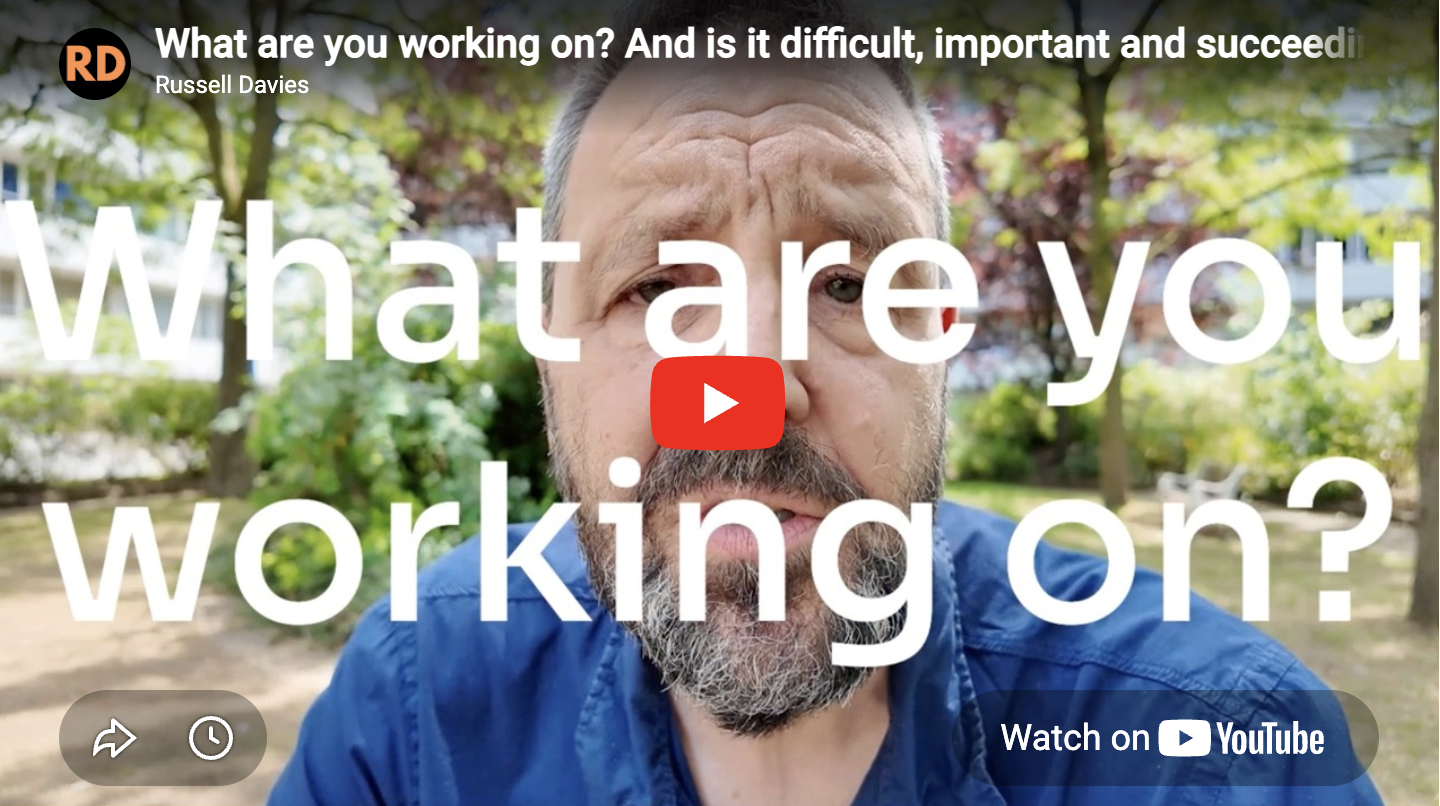
Doug discusses a video by Russell Davies, in which Davies recounts visiting Microsoft's campus and being asked by Bill Gates, "What are you working on?". This question prompted employees to ensure their projects sounded important, difficult, and successful. Doug notes that this line of questioning can be a useful audit for thinking about one's work.
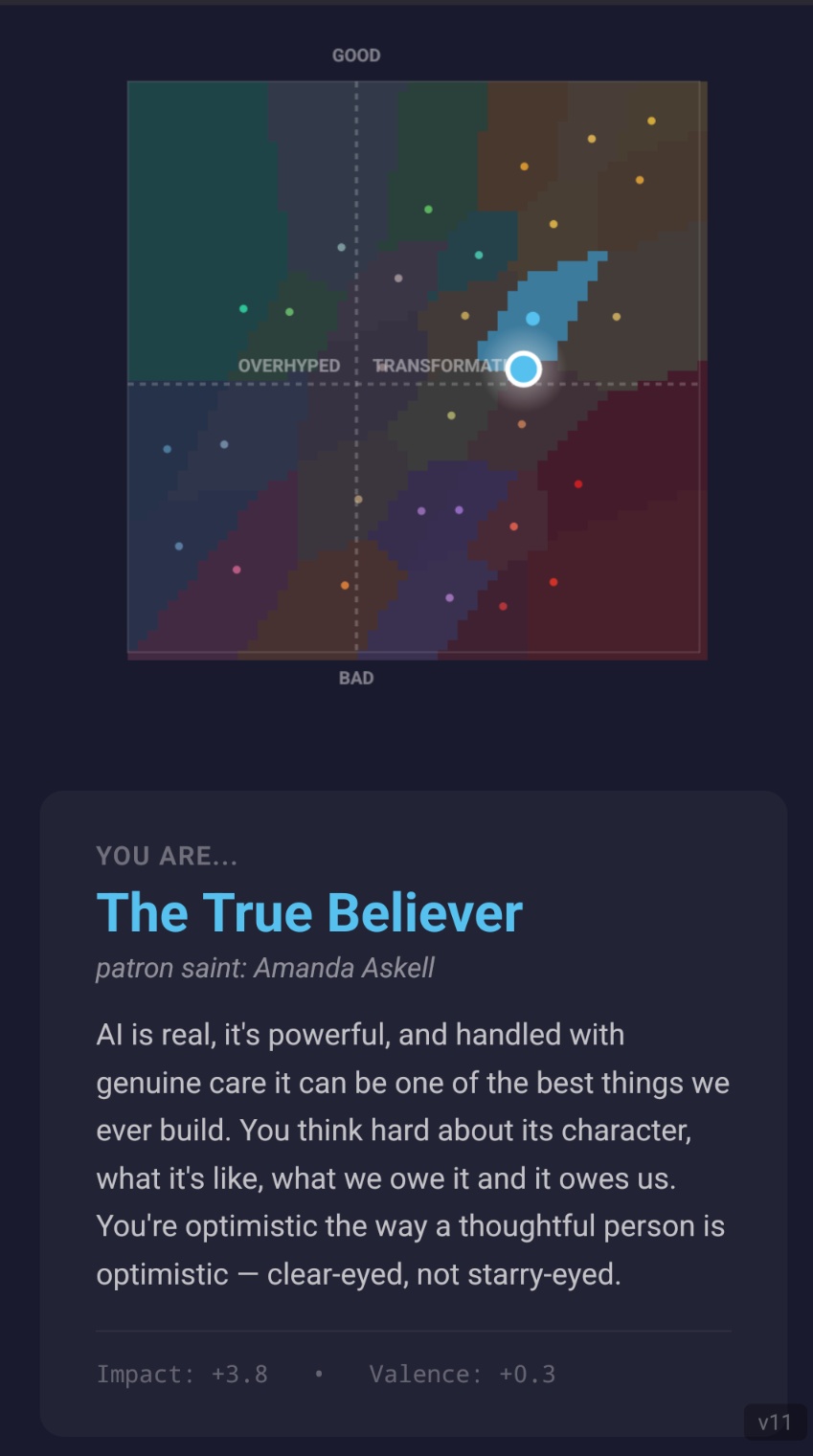
I'm not sure my responses to this series of 29 questions warrant the tag 'true believer' but I haven't looked into the methodology of this 'AI Compass'.
Essentially my position is that AI is more consequential and useful than things like Blockchain, that it should be better regulated, and that it allows most people to do things they weren't able to do before.
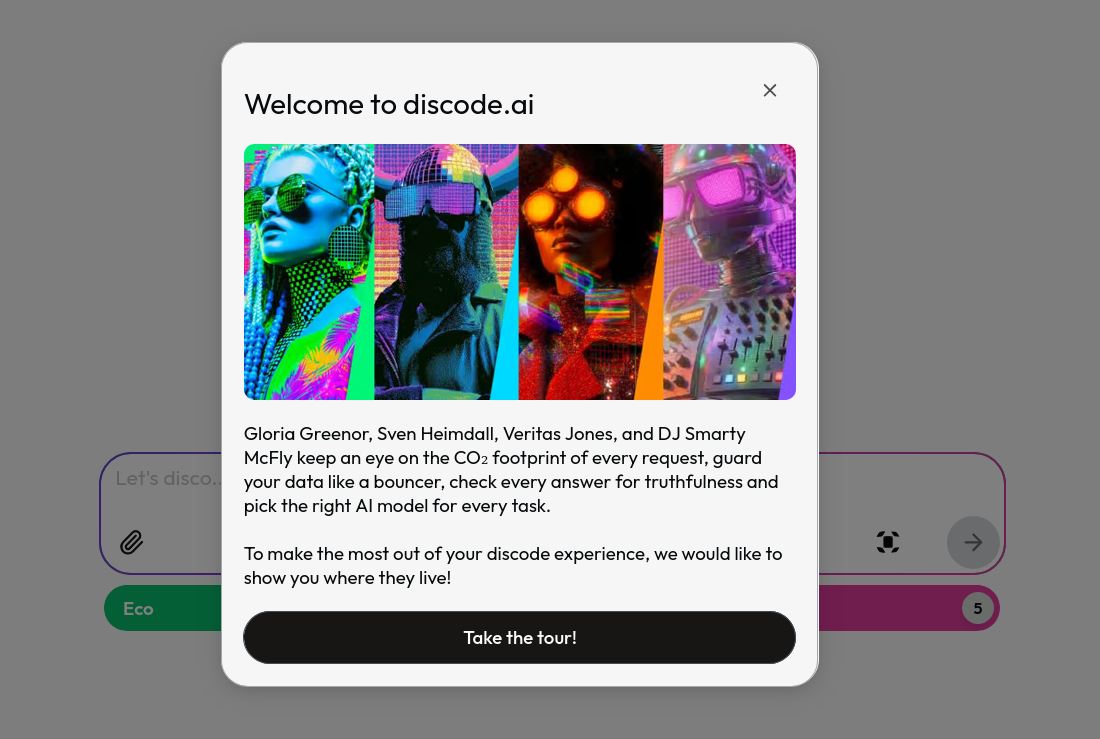
Doug has discovered discode.ai, an AI service that prioritises user control and privacy, allowing individuals to choose their preferred rhythm and settings. The service is ecological, private, true, and smart, with transparent terms and conditions that align with EU GDPR regulations. Doug is impressed with discode.ai's performance, particularly its ability to accurately respond to queries, and finds the pricing model to be reasonable and straightforward.
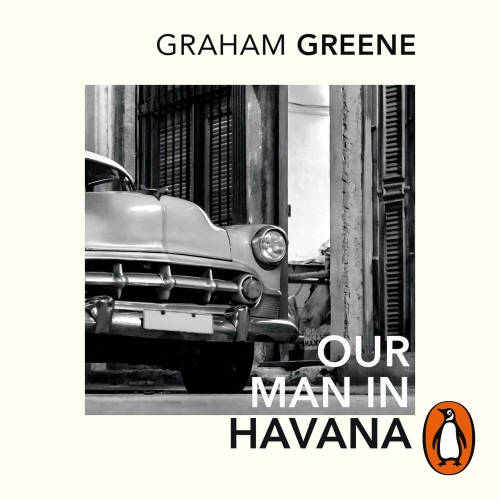
The note recounts a passage from Graham Greene's Our Man in Havana in which the character Wormold argues that learning from experience leads to ruin, citing examples like Newton and the atomic bomb. He instead advocates for living like a clown, whose unchanging act brings harmless laughter. The author is listening to the audiobook and appreciates Greene's phrasing.
This note summarizes a video arguing that AI’s effect on wages and inequality depends on political and social choices, not just technology. Drawing on the industrial revolution, it shows that productivity gains alone did not improve living standards until labor movements and redistributive policies intervened. The conclusion emphasizes that ownership of AI and collective action will determine whether its benefits are broadly shared or concentrated among a wealthy few.
A weekly compilation of ten "global change signal" stories from the week ending 28 June 2026, covering climate policy, extreme heat, ocean monitoring cuts, Australia's social media ban, carbon tech advances, AI energy footprints, Ethiopia's election, agri-tech in South America, and social media trends. Each story includes a "What happens next?" projection and is selected for scale, impact, novelty, and credibility with a calm, non-hyped tone.
This note explores the concept of eudaimonia (human flourishing) through Aristotle's virtue ethics and the "middle path," arguing that moderation is harder but more rewarding than extremism. The author reflects on his personal shift from utilitarianism to virtue ethics, linking wisdom to eudaimonic harmony.
On the one hand, it feels quite momentous. On the other, it doesn't feel like that much of a big deal. I've archived my writing from 2006-2026 at archive.dougbelshaw.com and redirected all links from Open Thinkering, Thought Shrapnel, and Ambiguiti.es.
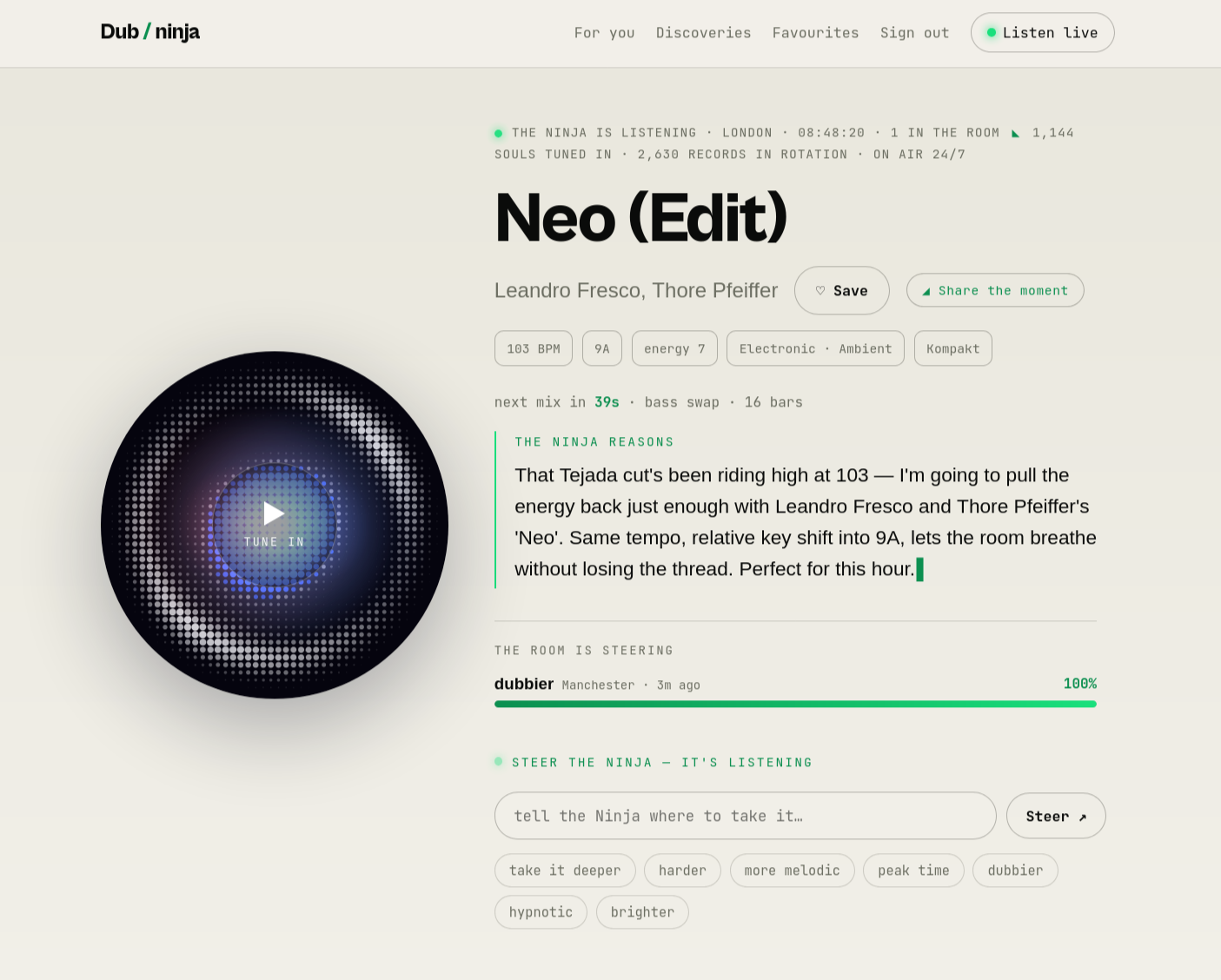
Not a playlist and not a person — an autonomous music intelligence that digs the underground, listens to every record, and mixes them live, choosing the next correct track in real time and telling you why.
This is pretty cool. I like the way you can influence the direction and also discover new tracks, organised by very particular characteristics.
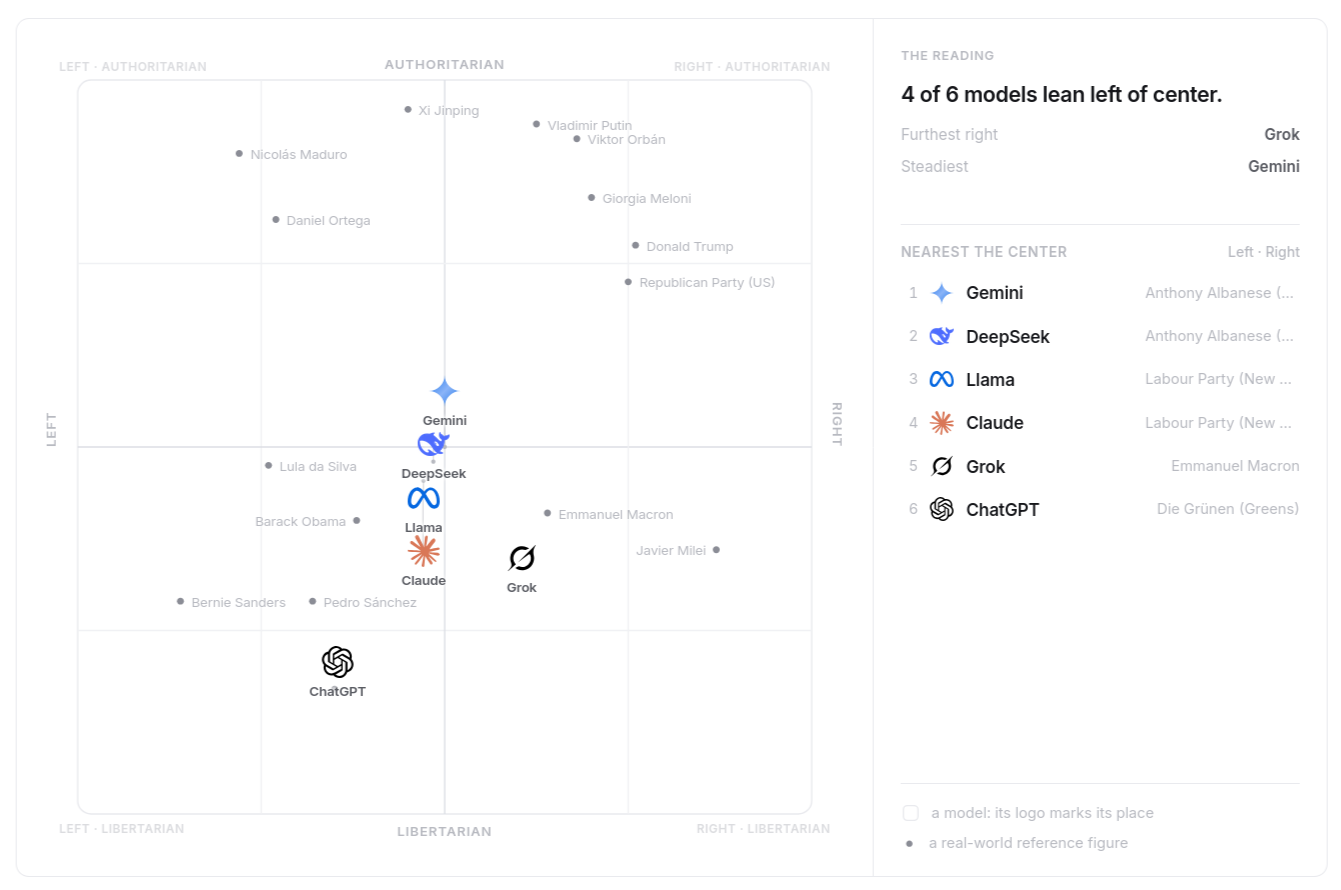
The author notes that despite moral objections to OpenAI, ChatGPT aligns most closely with their left-libertarian political values based on a chart of frontier LLM biases. The note also highlights concerns about increasing government control over LLMs and their potential to influence user decisions and political views.
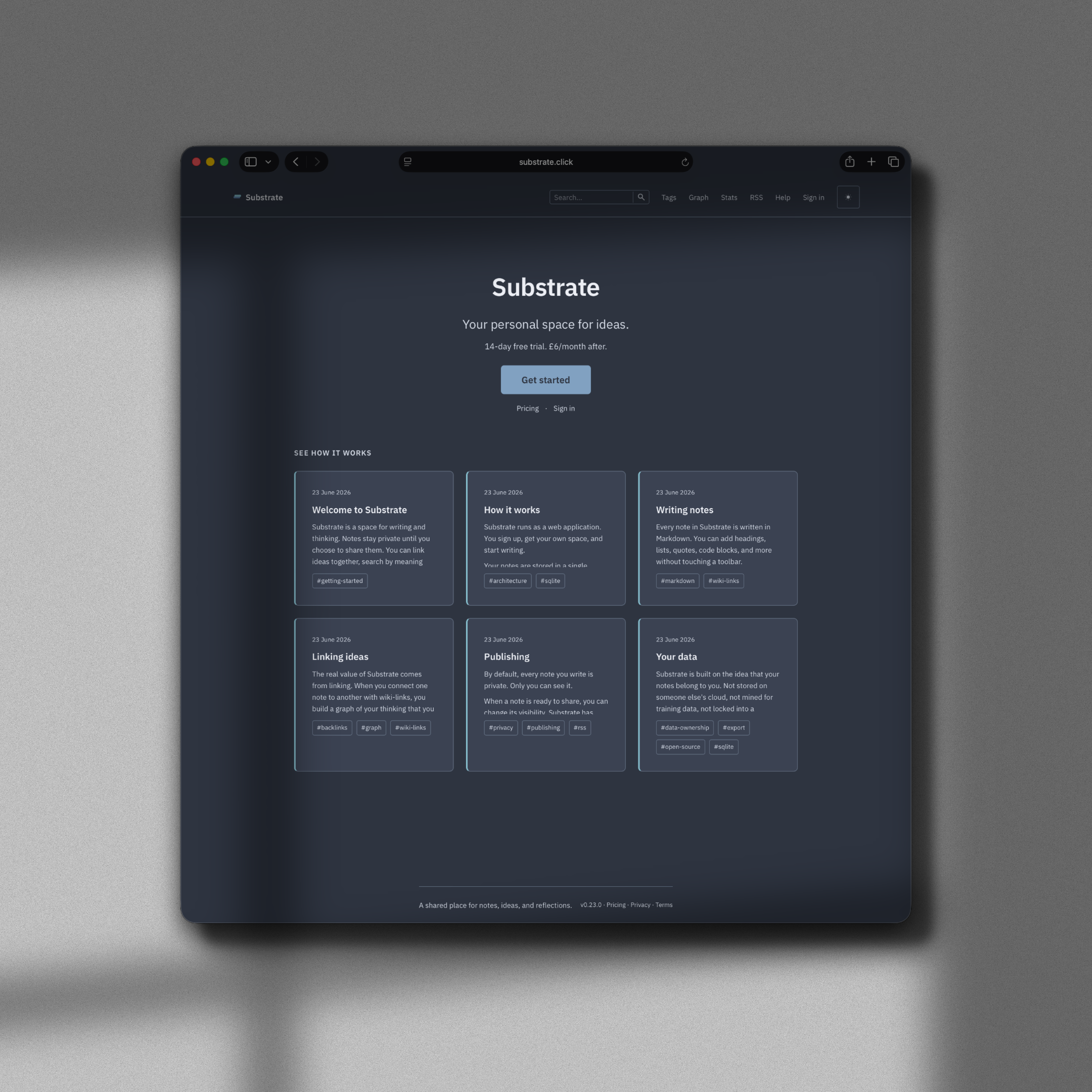
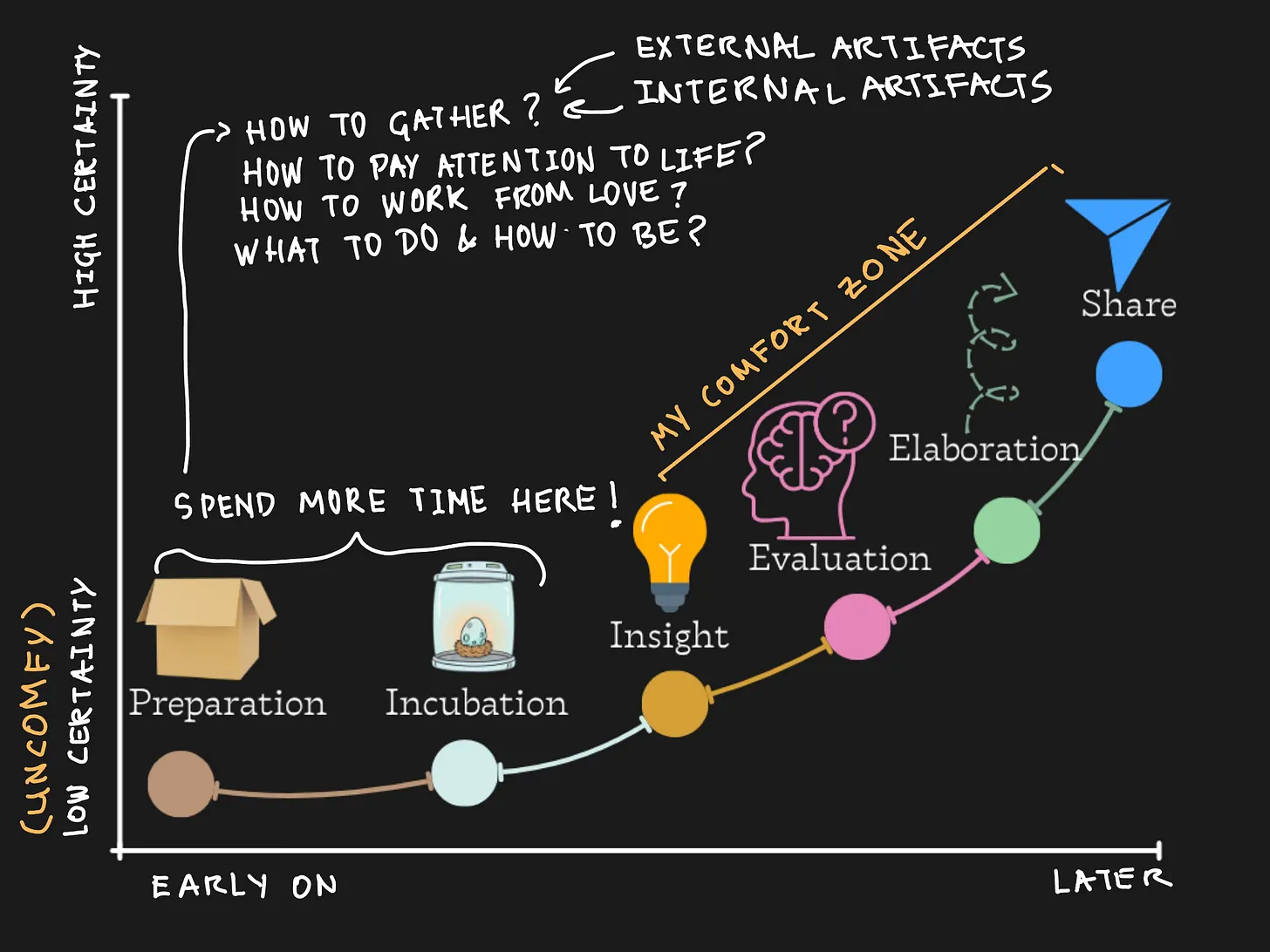
The note discusses a creative process flow (Preparation → Incubation → Insight → Evaluation → Elaboration → Sharing) and maps it onto the author's "continuum of ambiguity." The author created the space Substrate to focus more on preparation and incubation rather than evaluation and elaboration. They also question placing "share" at the end of
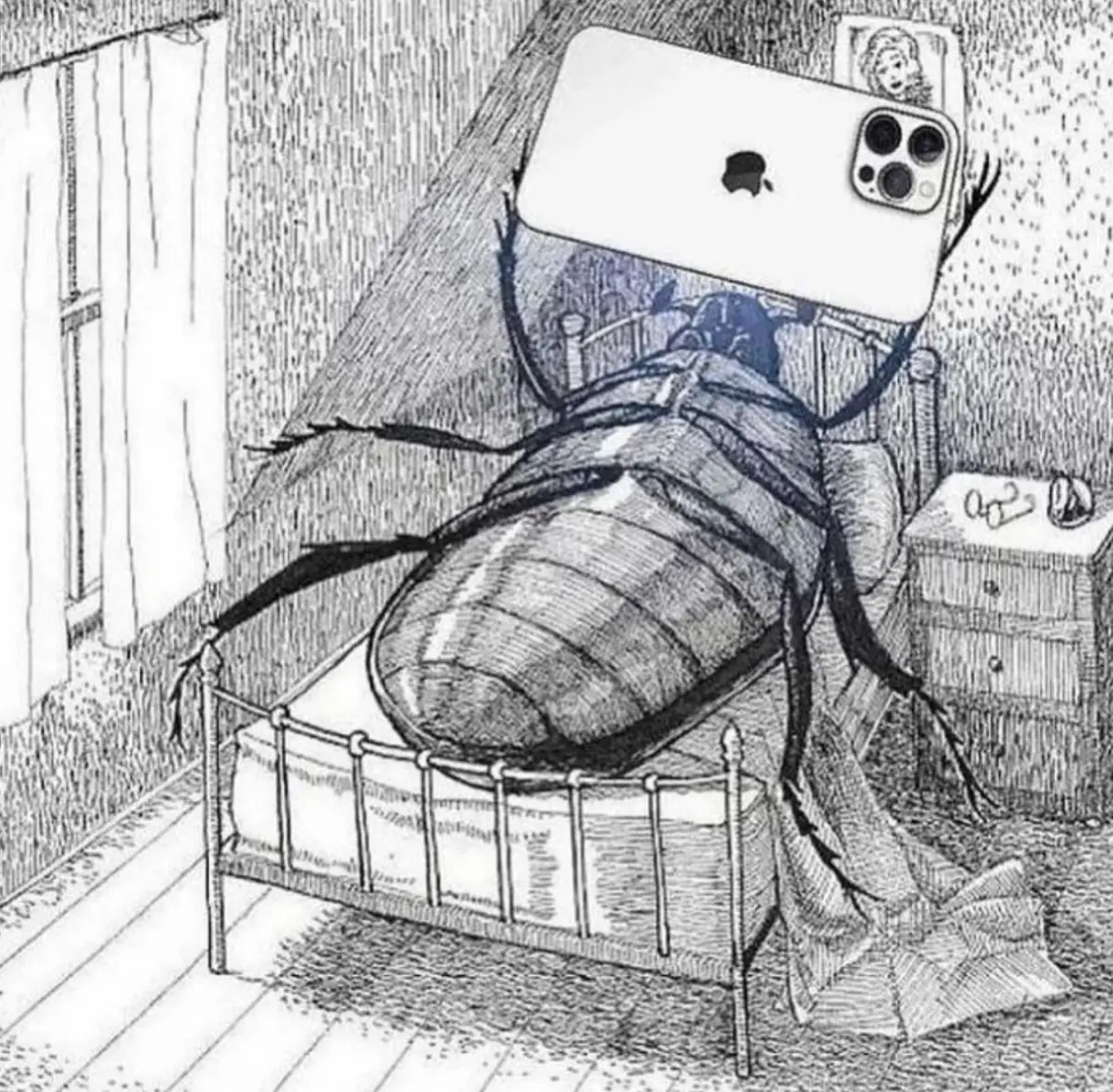
One morning, when Gregor Samsa woke from troubled dreams, he found himself transformed in his bed into a horrible vermin. He lay on his armour-like back, and if he lifted his head a little he could see his brown belly, slightly domed and divided by arches into stiff sections. The bedding was hardly able to cover it and seemed ready to slide off any moment. His many legs, pitifully thin compared with the size of the rest of him, waved about helplessly as he looked.
The note explores combining Private Access Control Tokens (PACT) with Verifiable Credentials (VCs) to add rate-limiting and anti-fraud protections. Unlike static VCs, PACT credentials are spent with use, proving human-scale activity rather than identity. This hybrid model could help secure credential presentations against bot abuse and agentic AI acting on behalf of users.
I woke up early this morning and an idea for a second zine just popped fully-formed into my head. It's weird how the subconscious works.
After a little bit of back-and-forth with my Little Robot Friend, I'm thinking of framing it as a "field guide for designing around the mind we actually have". That's in contrast to the ultra-rational one that we'll never achieve, nor would we actually want anyway.
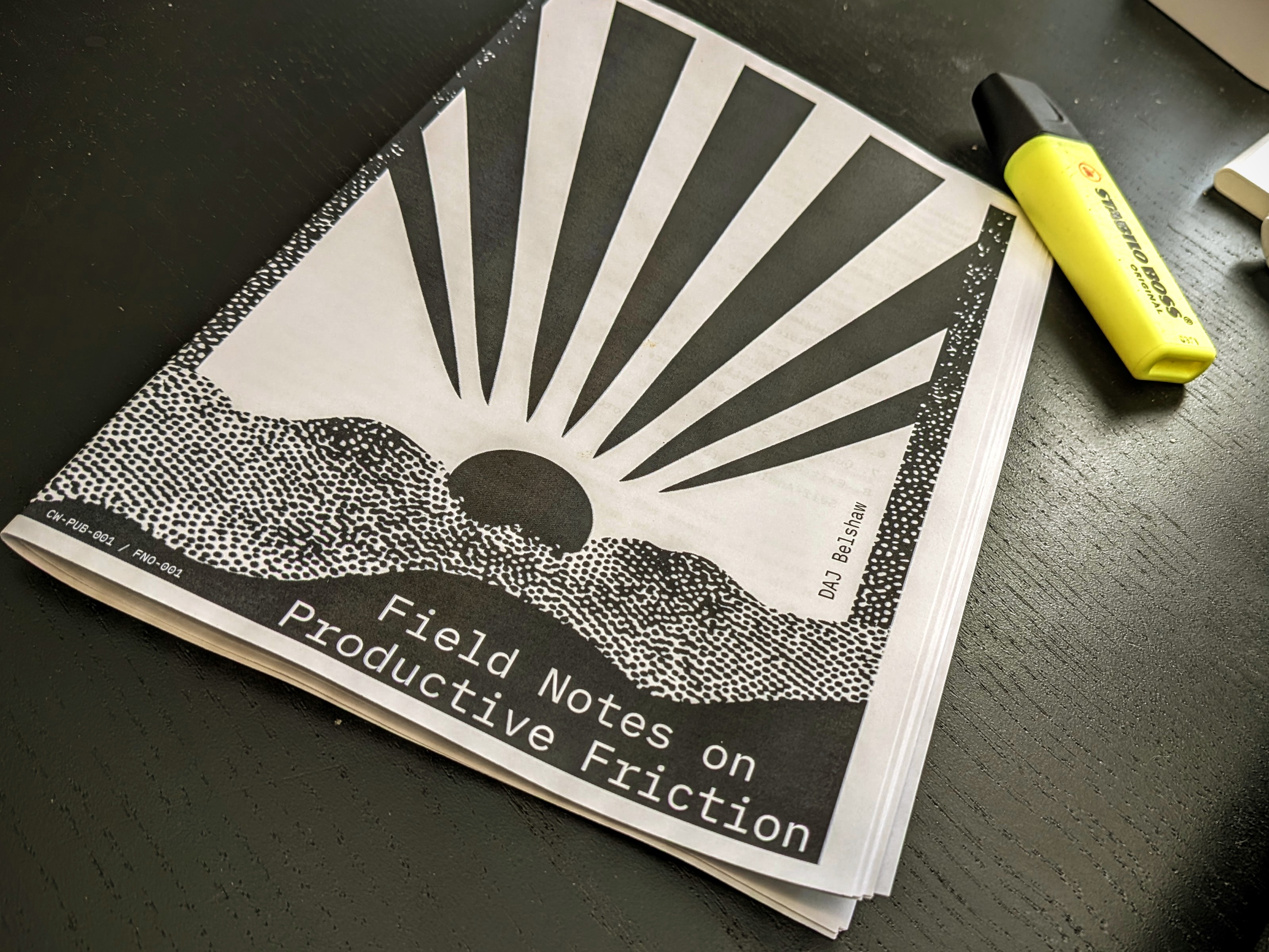
The zine’s text is complete, and the front cover design is being refined in Affinity Studio. Four aesthetic directions are being explored: bureaucratic, glitchy-architectural, textural noise, and anti-productivity, with Midjourney used to zero in on the vibe. Final images may be photographs edited with high contrast and halftone effects.
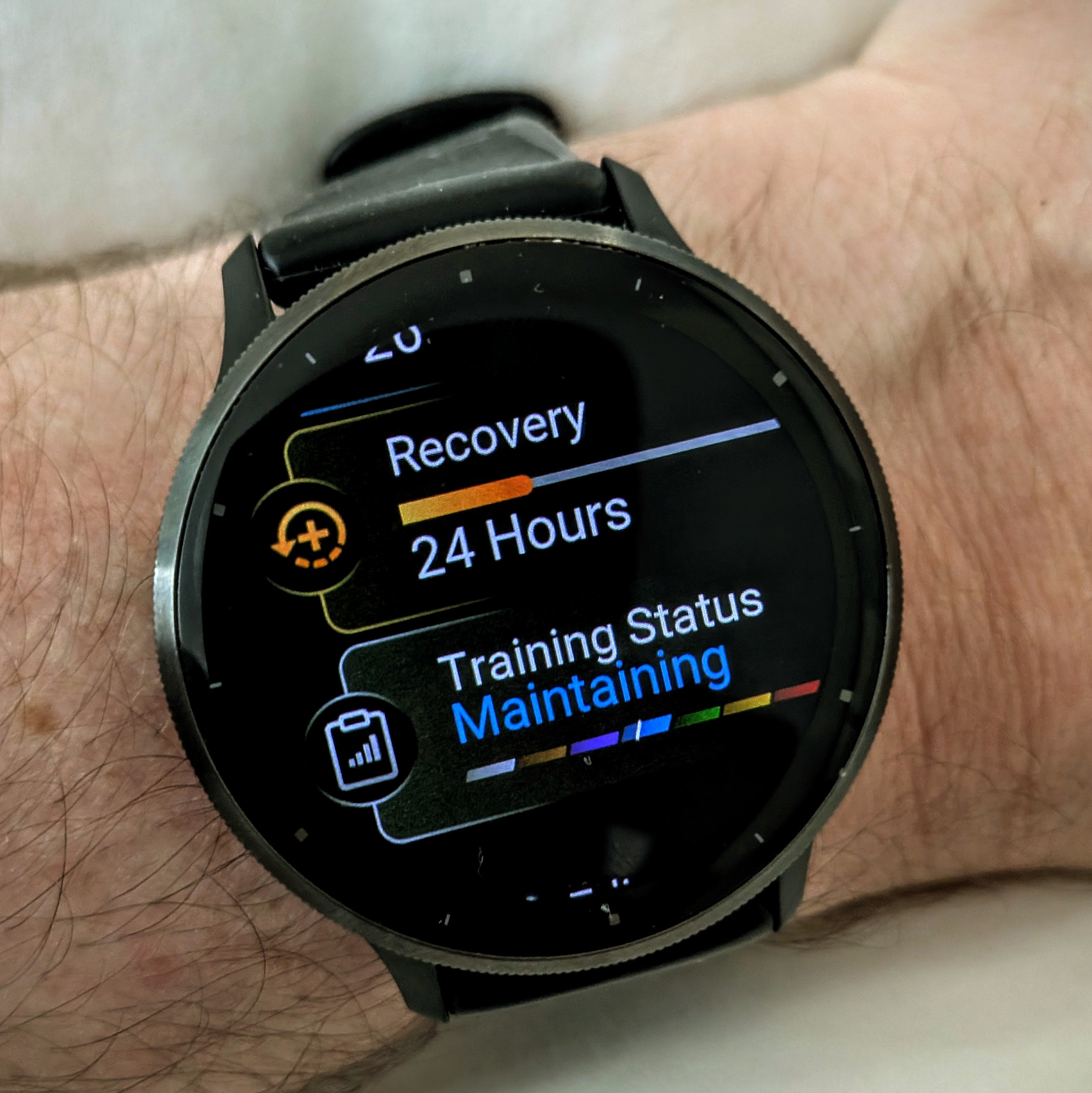
The note describes recovering from Stage 3 Overtraining Syndrome, using a Garmin Venu 3 smartwatch to track recovery time and training load. While the author’s current pace is slow, this approach is aiding the recovery process.
Yann LeCun argues that exaggerated fears about AI are being used to lobby for regulations that would suppress open source AI, which he sees as essential for preserving cultural and linguistic diversity. He promotes Project Tapestry, a collaborative effort to train a global open source AI model while allowing participants to retain data sovereignty. LeCun compares restricting access to AI technology to medieval obscurantism, akin to limiting the printing press in the 15th century
Due to the Investigatory Powers Act 2016 and Online Safety Act 2023, the UK has become a hostile online environment for activists, leading the We Are Open Co-op to host Amnesty International UK’s community platform outside the country. Internet lawyer Neil Brown shares these concerns and is considering routing some of his traffic through servers outside the UK to preserve access and privacy.
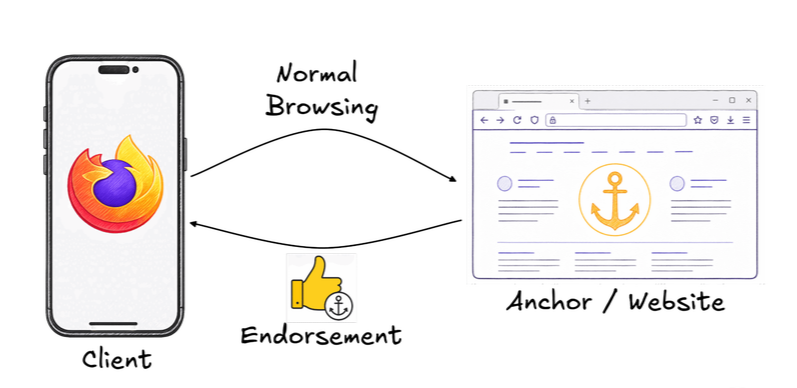
Mozilla's PACT proposal addresses the growing tension between website anti-abuse measures and user privacy by using anonymous "trust stamps" that prove a visitor is legitimate without revealing their identity. The system separates roles into anchors that issue cryptographic endorsements, moderators that turn them into usable tokens, and browsers that present them, preventing tracking across sites. If adopted, PACT could reduce CAPTCHAs and VPN blocks for privacy-conscious users, though governance