notes

Need for cognition

Writing in The Atlantic, David Brooks discusses how, as a technology, AI is used differently depending on predispositions:

The general pattern that the research points to is that many people don’t use the time they save using AI to do less; they use the time to take on new tasks. AI also seems to shift workers’ expectations, and their boss’s expectations, about how much they should accomplish in a day. Every hour feels more crowded, but also more frazzled. The ActivTrak researchers found that the time people spent on focused, uninterrupted work fell by 9 percent. There’s even a name for this mental state: “AI brain fry.”

notes updated

Toward a spectrum of AI trust

What I like about this post is that it brings a bit of nuance to proceedings.

Not every audience group or individual user will care about the provenance of the content they’re consuming. It also depends on a case-by-case basis; sometimes AI-assistance changes everything versus other times, it barely registers.

ideas updated

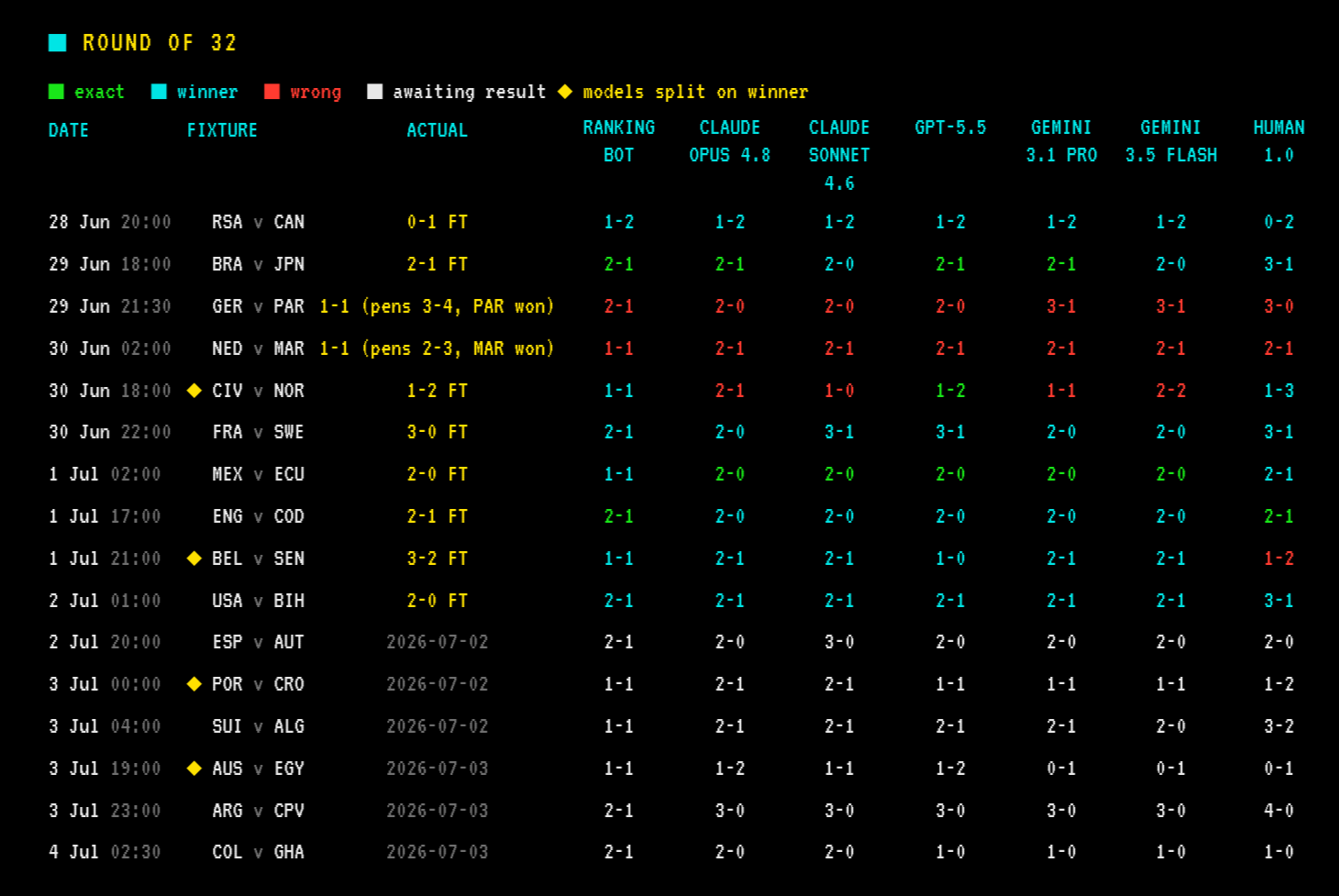
Using AI to predict the outcome of World Cup games

First of all, as a man of a certain age, can I just say how much I love the Teletext vibe of this site? It's comparing different AI models versus straight FIFA rankings, versus the perspective of a single human, in terms of predicting the outcome of World Cup 2026 football matches.

notes updated

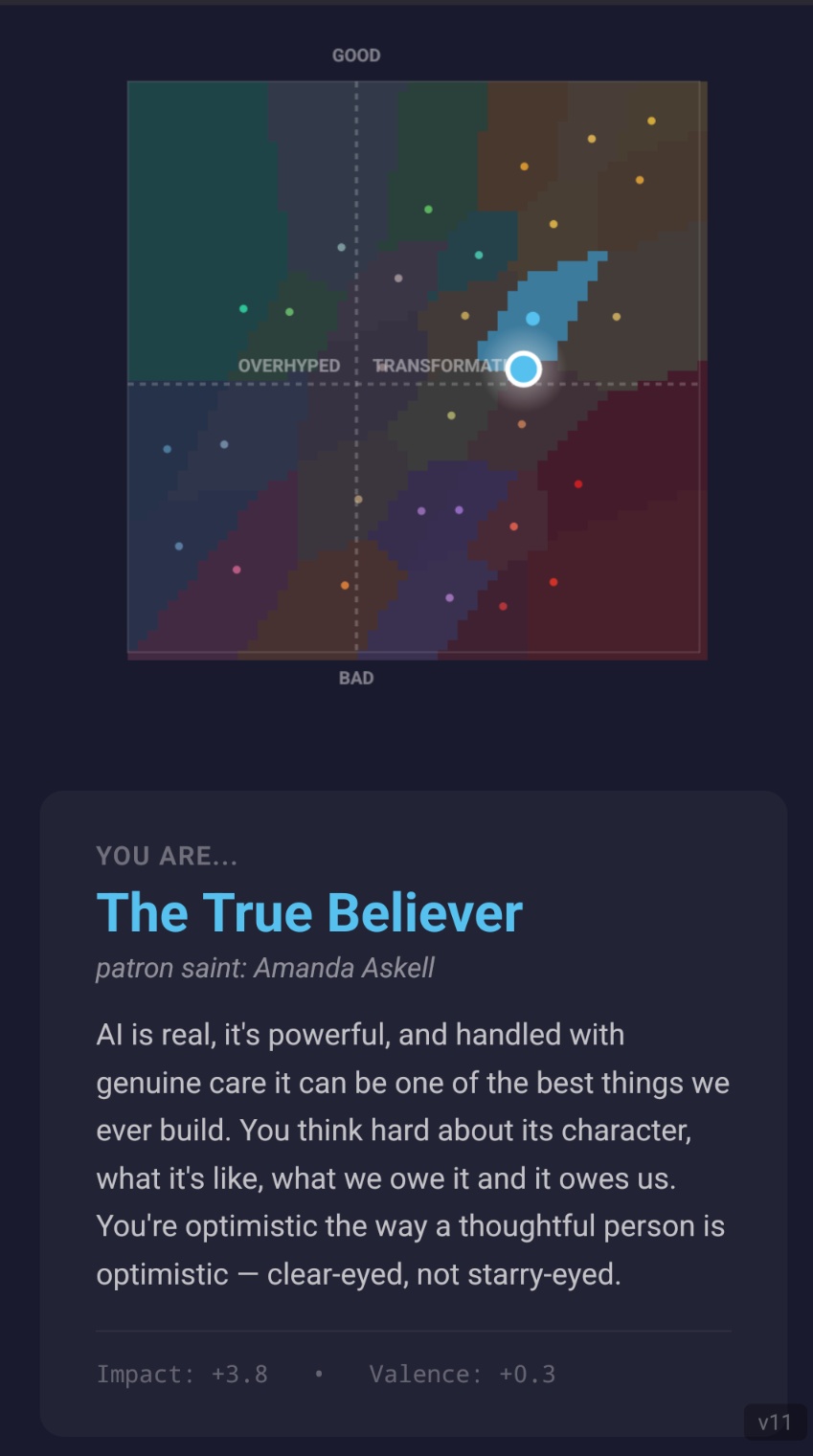
I wouldn't call myself a 'true believer'

I'm not sure my responses to this series of 29 questions warrant the tag 'true believer' but I haven't looked into the methodology of this 'AI Compass'.

Essentially my position is that AI is more consequential and useful than things like Blockchain, that it should be better regulated, and that it allows most people to do things they weren't able to do before.

notes updated

Discode Inferno

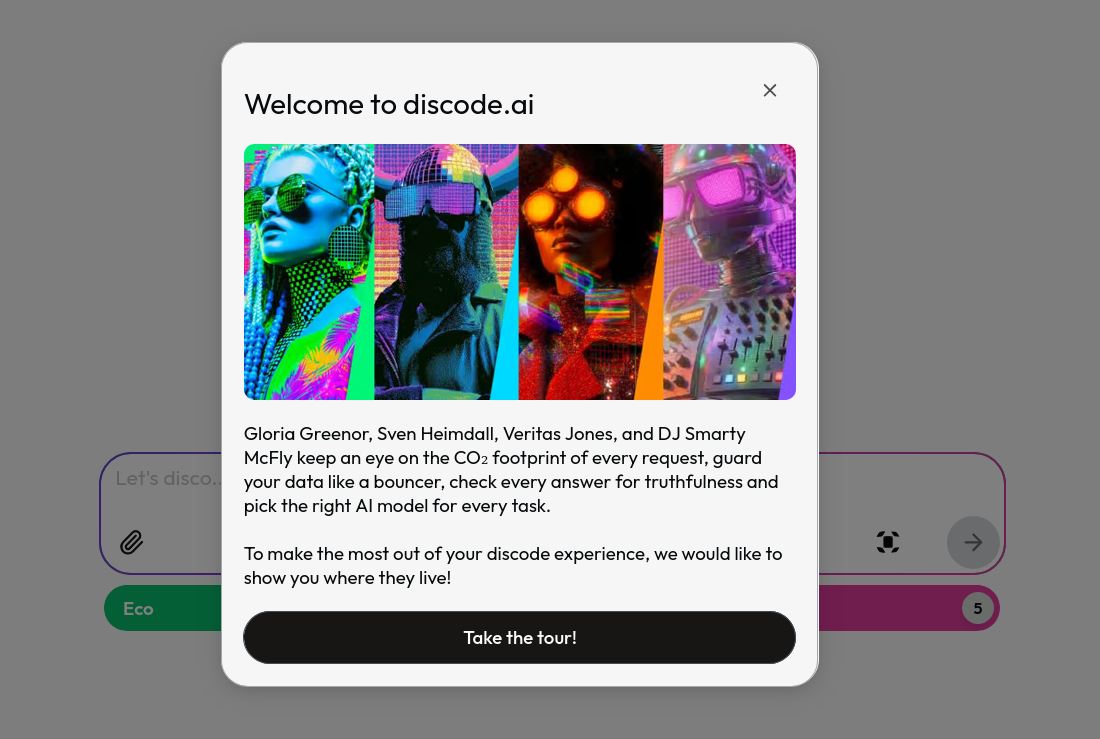
I came across discode.ai this morning, which describes itself like this:

You choose the rhythm, not the algorithm. Ecological, private, true and smart AI — built in Austria.

While I initially thought that it was a bit odd that a EU-based startup positioning themselves like this only allowed you to sign in via Google, thankfully you can provide a user name and password and just use that.

notes updated

TL;DR: it's up to us

This video, Will AI destroy the economy? from Gary's Economics is a must watch. I viewed it on 1.5x speed and it's a really useful, accessible message.

I asked my Little Robot Friend to create an overview with timestamps for those who aren't so fond of watching videos:

notes updated

Autonomous AI DJing

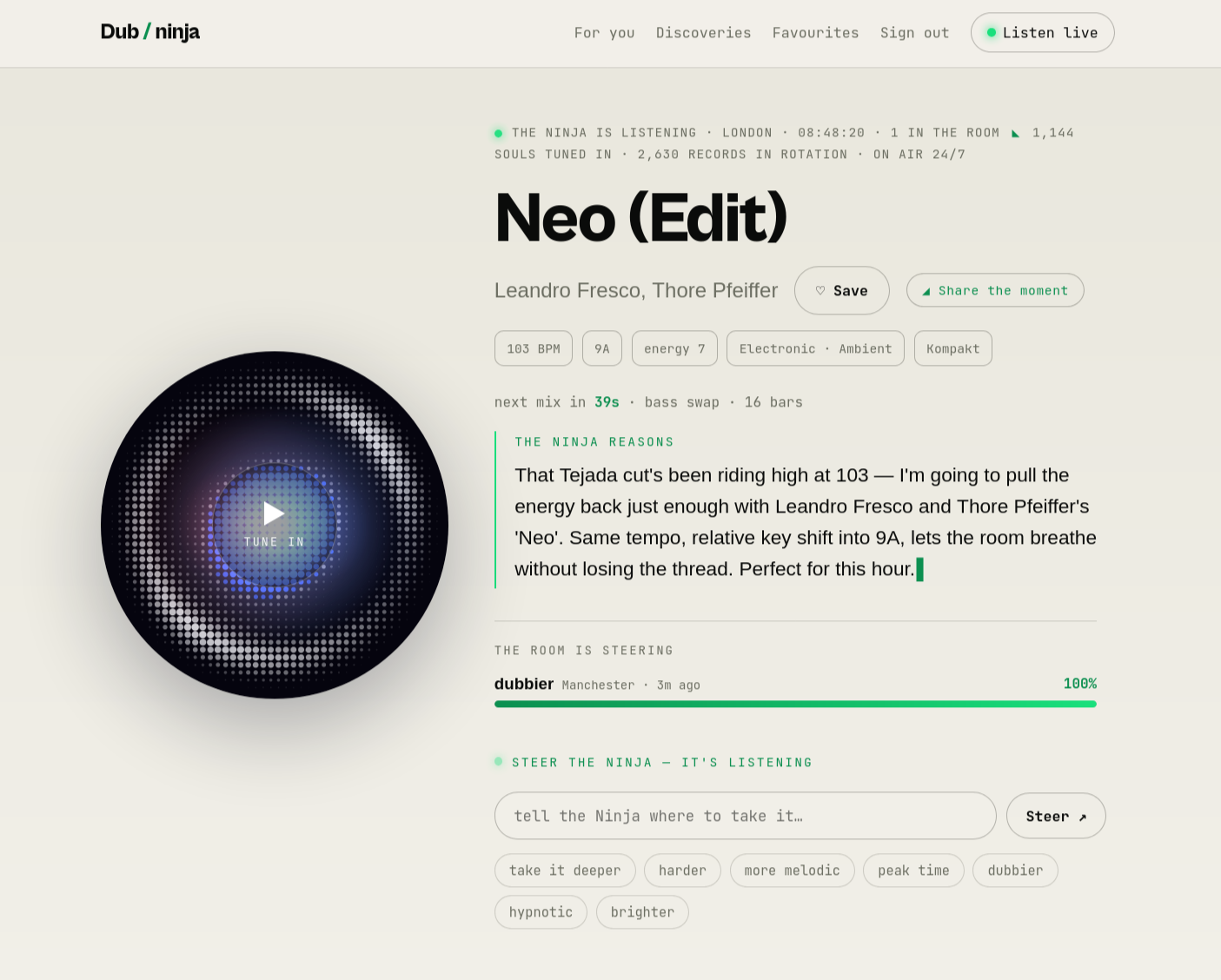
Not a playlist and not a person — an autonomous music intelligence that digs the underground, listens to every record, and mixes them live, choosing the next correct track in real time and telling you why.

This is pretty cool. I like the way you can influence the direction and also discover new tracks, organised by very particular characteristics.

ideas updated

What you gonna do, Luke Skywalker?

A follow-up to [this note] given Anthropic's recent announcement that they're going to require government-issued ID to use "certain features" of their models. They're using none other than Peter Thiel-backed Persona for this. Ugh.

notes updated

An AI (compute) cooperative

This is an interesting idea: “co/core is a place where people share the compute they already own to run AI for each other, instead of renting from a handful of giant providers.” Mac only for the moment, but the main innovation is building a standard for being able to share compute power.

notes updated

The emotional aspect of burnout

Ky Decker has written a really interesting post about quitting his tech job. Yes, the proximal cause is AI, but once you get past that, there some interesting points on productive friction, values, and burnout.

No matter how rapidly technology changes, I am coalescing around some core beliefs:

notes updated

AI ventriloquism

This post very much goes with my previous one about embodied cognition. Although we shouldn't allow people to wield capricious power based on "gut feel", nor should we accept the outsourcing of decision-making to LLMs. Especially when it's done in the way outlined below, by people unaware of the way that commercial full-stack AI tools are built to validate whoever is using them.

notes updated

Retiring from tech to work at Home Depot

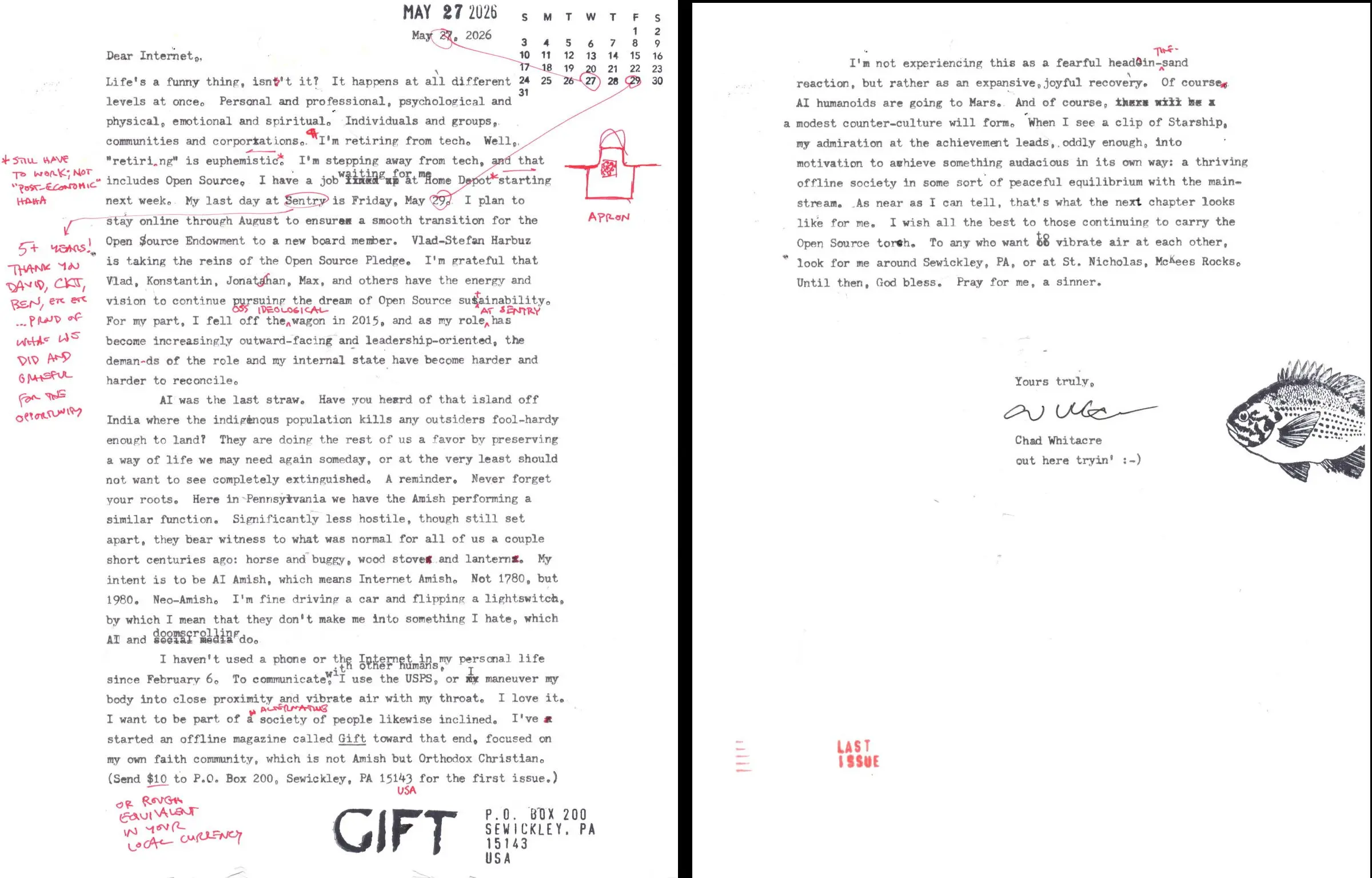
The Head of Open Source at Sentry, a really well-known (and seemingly well-loved) guy by the name of Chad Whitacre, has "retired from tech" to go and work at Home Depot. I'm not entirely sure what to make of this, but the way he did it was pretty awesome.

reflections updated

Reports in the age of AI

I'm currently working on a report for a client. The purpose of the report isn't really to do anything else but provide an audit trail; it won't be read by many people, nor does it contain anything I haven't already shared in other documents along the way.