← All notes

#viable system model

October 2026 4 notes

notes updated 5 min read

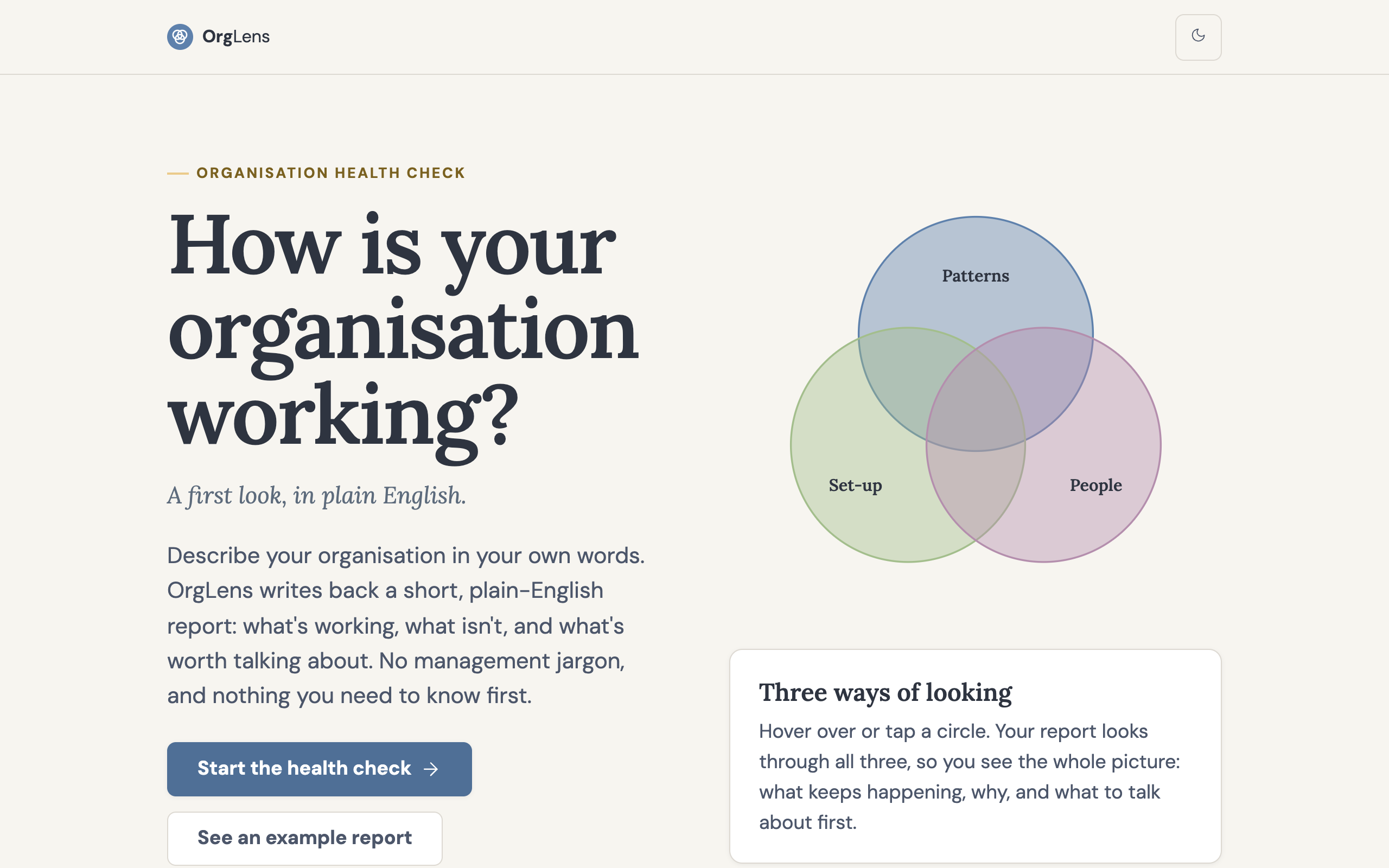
Introducing OrgLens, a systems-based health check for organisations

AI summary

Doug has introduced OrgLens, a free and open-source systems-based health check for organisations, which allows users to describe their organisation and receive a report on what's working and what areas need improvement. The tool uses systems thinking to analyse the organisation from three different perspectives and provides a report with quotes and suggestions for next steps. OrgLens is available to try online, with the option to run a private copy using the open-source code.

…


notes updated 6 min read

OrgLens: 3. Teaching a tool to be careful, then giving it more than one lens

AI summary

Doug's OrgLens project aims to create a tool that can provide a useful organisational health check by analysing what people say about an organisation. The latest developments have focused on teaching the tool to be more careful and giving it multiple "lenses" to examine an organisation, including System Dynamics and Perspectives. The tests have shown promise, but also highlight the need for human judgement and the importance of verifying the tool's conclusions.

…
ideas updated 9 min read

OrgLens: 2. Making an organisational health check people can actually use

AI summary

Doug has been developing OrgLens, a tool for organisational health checks, to make it more accessible to people without a systems thinking background. He has made progress in creating plain-language reports that are easy to understand and trust, by incorporating checks and using ordinary language to describe findings. The tool has shown promising results in tests with fictional organisations, but Doug acknowledges that there are still limitations and caveats to be addressed, including the need for human evaluation and validation.

…
ideas updated 15 min read

OrgLens: 1. Can an AI agent do systems thinking?

AI summary

Doug has been experimenting with AI tools, specifically Raven, to see if they can help with organisational diagnosis using systems thinking, particularly the Viable System Model (VSM). He found that the AI agent was better at modelling than expected, but still made similar mistakes to people, such as choosing the wrong level of recursion or swapping certain system components. Doug concludes that an agent can make a credible first pass at modelling an organisation, but honesty and transparency need to be designed into the process.

…

September 2026 1 note

reflections updated 8 min read

#SysPrac26 – Day 2

AI summary

Doug attended the second day of SCiO's annual conference, where he participated in sessions on Systems Thinking in Government and the Viable System Model. He found Patrick Hoverstadt's session on VSM to be particularly insightful, as it reframed the model around five key tensions rather than complicated diagrams. Doug also attended a session on 33 Systems Laws & Principles, which he found useful for understanding complex systems.

…

May 2026 1 note

notes updated 1 min read

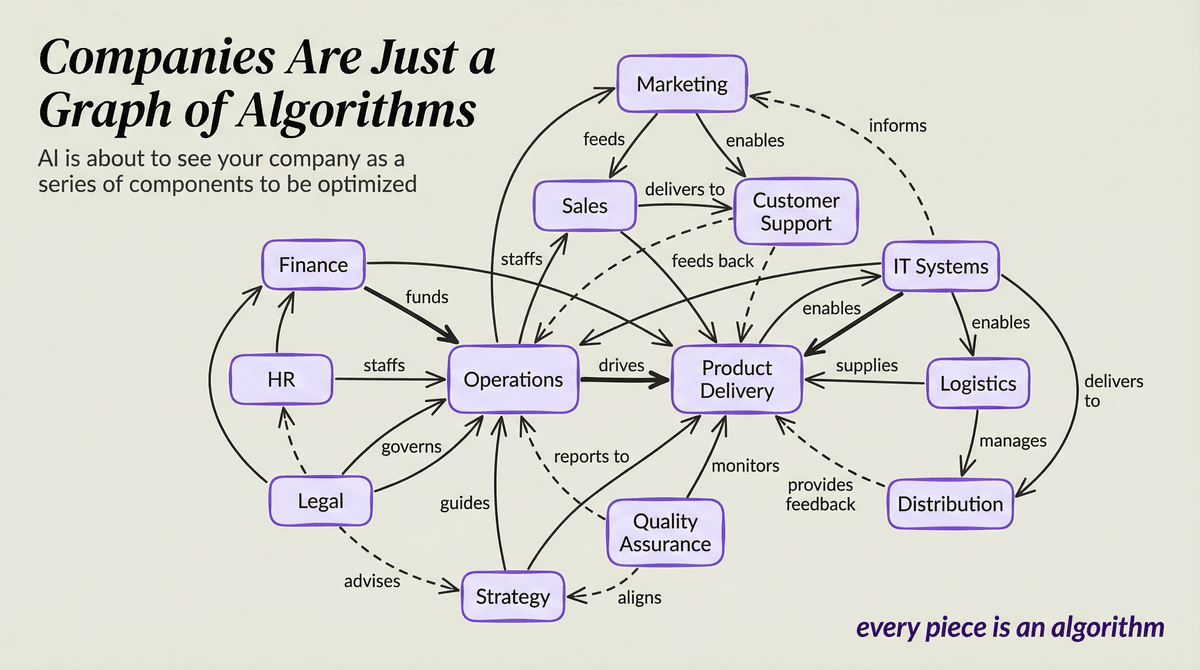
It's algorithms all the way down?

AI summary

The note critiques Daniel Miessler's idea that businesses are simply a "graph of algorithms" by linking it to Stafford Beer's Viable System Model, arguing that AI can optimize but not fully automate the complexity of multinational companies. The author concludes that human skill and context remain essential for redesigning processes.

…