
Introducing OrgLens, a systems-based health check for organisations
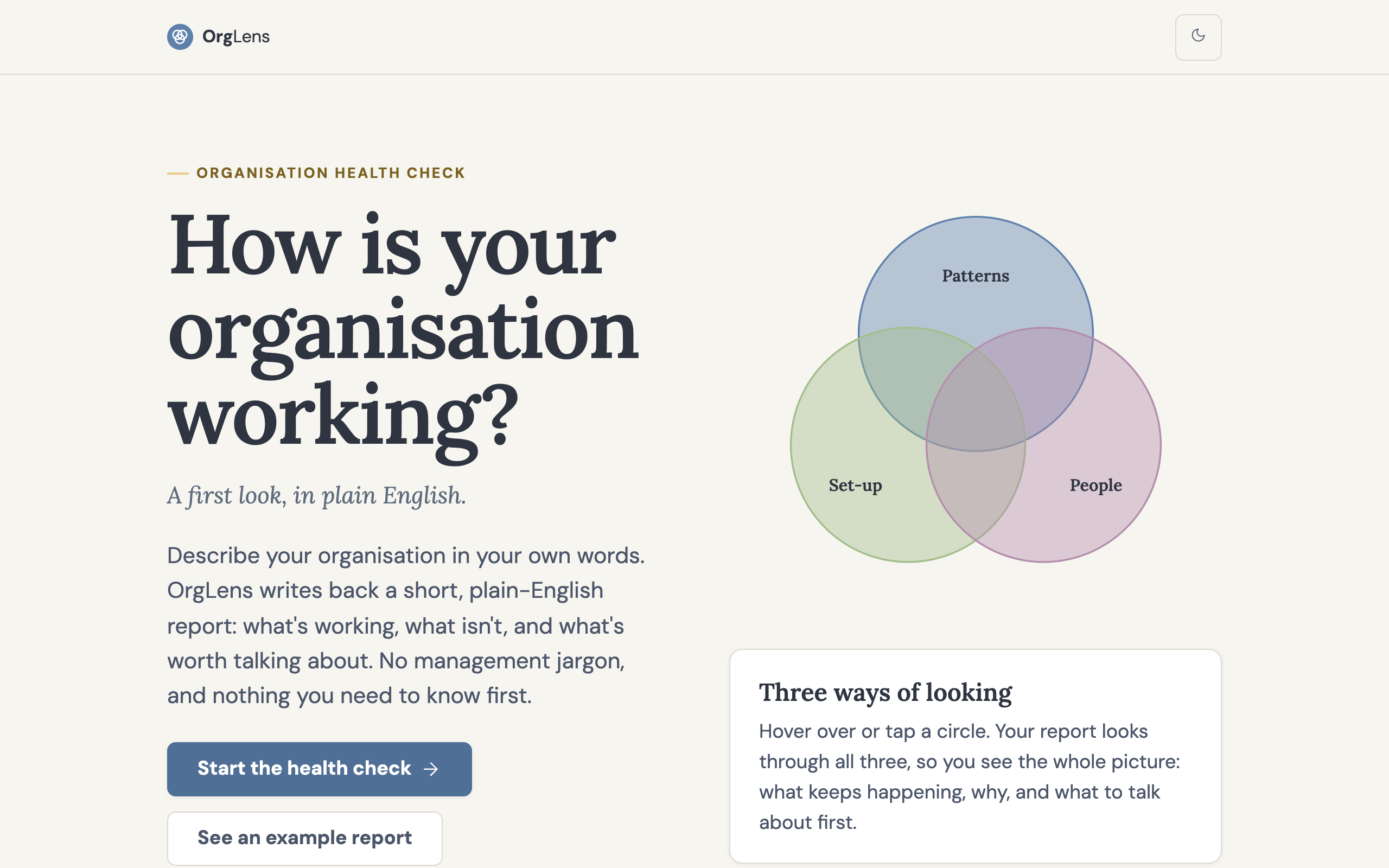 Most organisations I work with know something isn't quite right. The same problems keep coming back, people in different parts of the organisation describe it in ways that don't match, and nobody has the time, budget or appetite for a consultant to come in and tell them what they already half know.
So I've built OrgLens. It's free, it's open source, and you can try it today.
What it does
You describe your organisation in your own words: what you do, who does what, and what isn't working. Then two or more colleagues do the same, separately. OrgLens puts those accounts together and writes a short report on what's working, what isn't, and what's worth talking about.
Behind the scenes it looks at your organisation three ways, borrowed from systems thinking:
- What keeps happening, and why? Feedback loops and the patterns that make problems come back (Forrester, Senge, Meadows).
- How is it set up? Who does the work, what stops teams getting in each other's way, who looks ahead, and how bad news travels. This is Stafford Beer's Viable System Model.
- Do people want the same things? Where people see the organisation differently, who decides, who benefits, and who isn't in the room (Checkland's Soft Systems Methodology and Ulrich's Critical Systems Heuristics).
You don't need to know any of that. The report doesn't use the jargon; it talks about your organisation in the words people used.
How it works
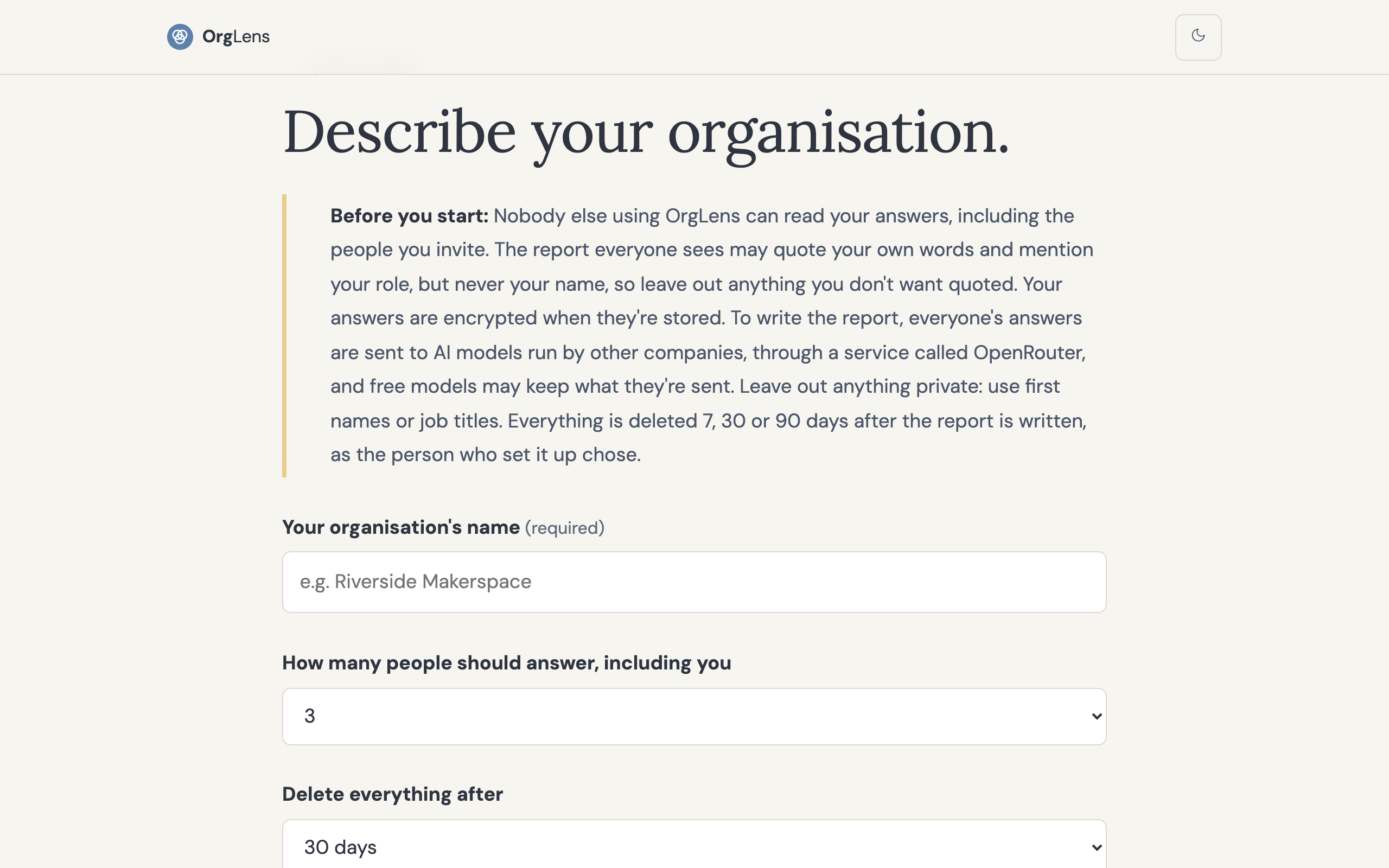
- Answer first. Whoever sets up the health check gives the organisation's name, how many people should answer, and how long to keep everything (a week, a month or three months). Then they write their own answers. You can type, add notes from files, or answer a list of prompts.
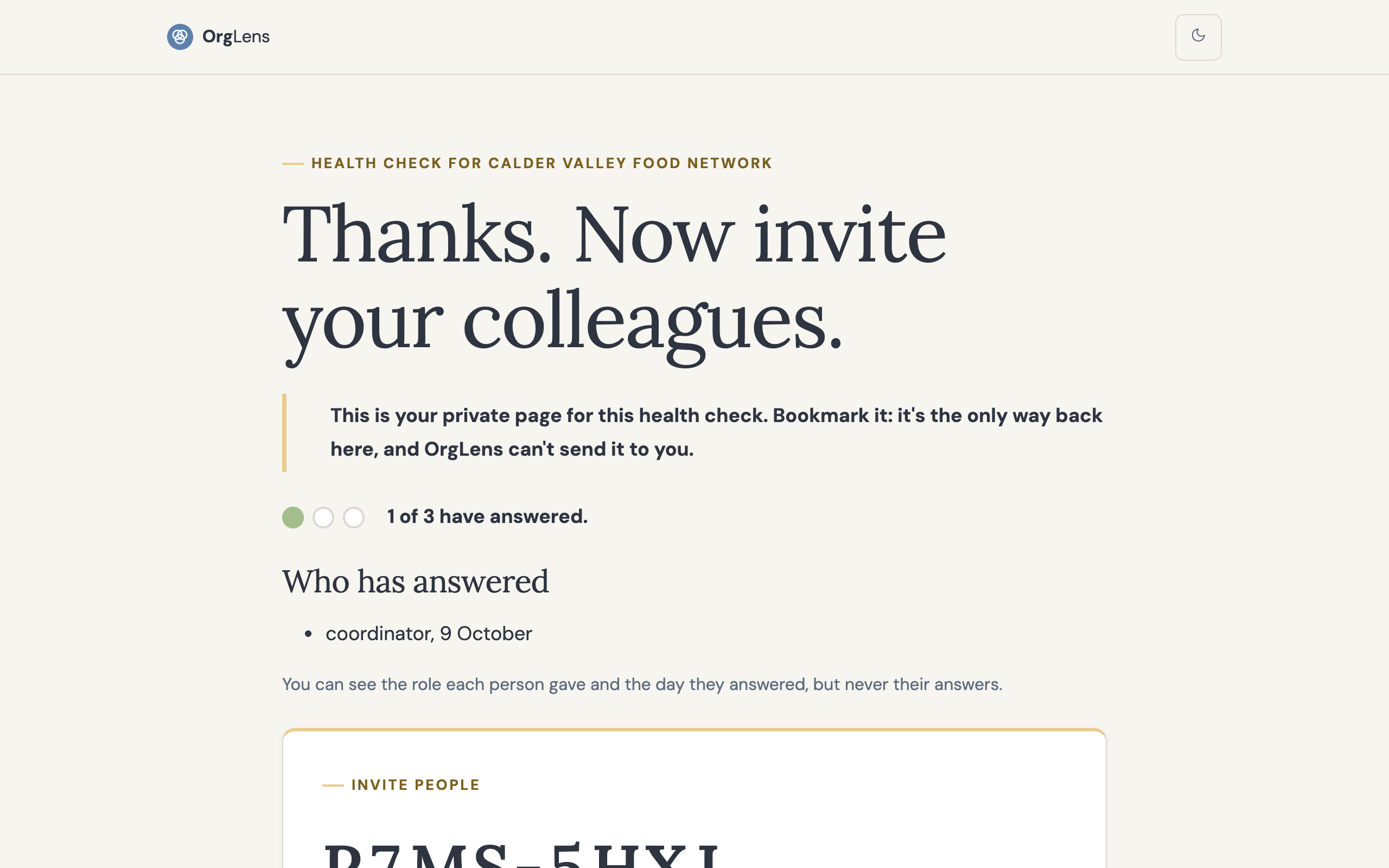
 2. Invite people. You get a private page with a link and a ready-to-send message. It shows who has answered, by the role they gave and the day, but never what they said.
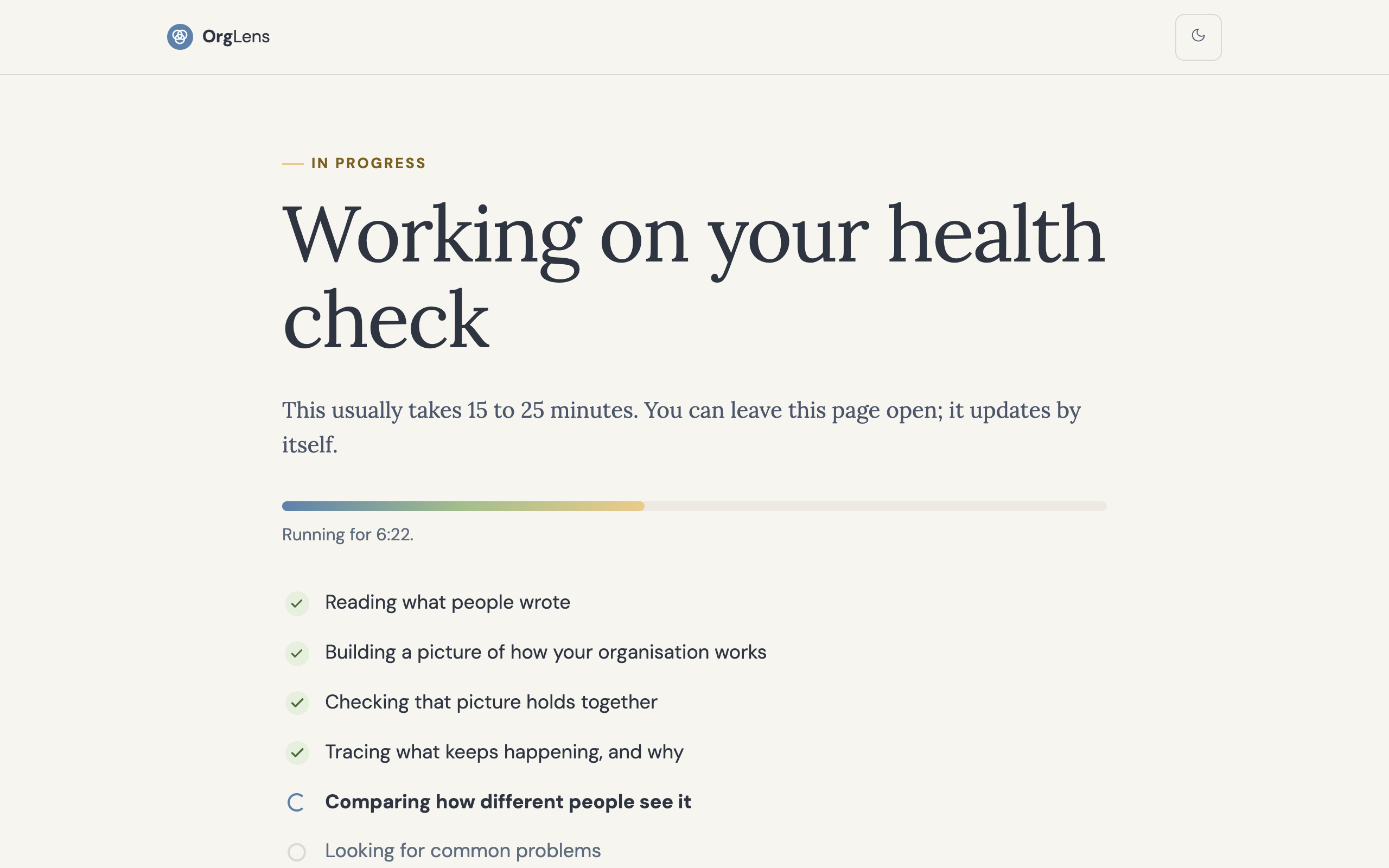
 3. Get the report. Once everyone has answered, OrgLens writes the report. On the free AI models this takes around 15 to 25 minutes, and you can close the page and come back.
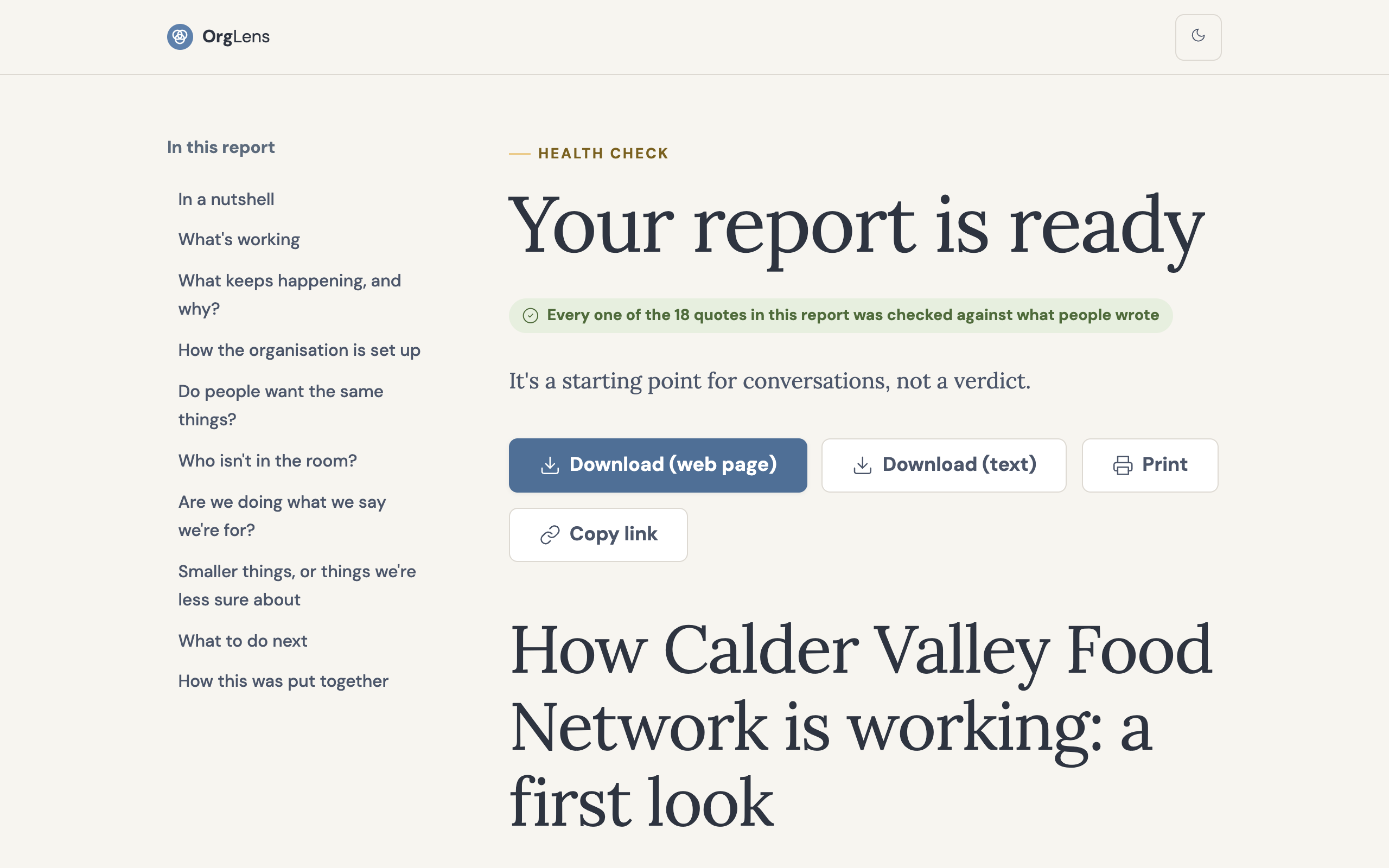
 The report starts with the whole thing in a nutshell, then what's working, what keeps happening and why, how the organisation is set up, where people see things differently, and who isn't in the room. It ends with what to do next and a list of questions to take to your next meeting. Every quote in it is checked against what people actually wrote.
 ---
---
What happens to what people write
I've been open and honest, both on the site and here.
- Nobody else using OrgLens can read anyone's answers, including the person who set up the check.
- The report everyone sees may quote people's own words and mention their role, but never their name. So leave out anything you wouldn't want quoted.
- Answers are encrypted when they're stored, and everything is deleted at the end of the time the person who set it up chose.
- To write the report, answers are sent to AI models run by other companies, through a service called OpenRouter. The free models may keep what they're sent. Use first names or job titles, and don't include personal details about the people you serve.
What it isn't
OrgLens is an experiment. I've tested it on fictional organisations with hidden answer keys, simulated people and AI judges, but it hasn't been used with a real organisation yet. That's what this launch is for.
Treat the report as a starting point for a conversation, not a verdict. It's only as good as what people tell it, and three honest accounts will tell you more than ten careful ones.
There are daily limits on the hosted version to keep it free, so if it's busy, try again tomorrow.
Open source
OrgLens is open source under the GNU AGPL, and the code is on Framagit. If you'd rather run your own copy, the README explains how; all you need is a Mac or Linux computer and an OpenRouter key. The repository holds the write-ups of the experiments behind it, including what happened when I asked AI agents to do this kind of diagnosis on their own.
Try it, and tell me how it goes
Start a health check at orglens.dynamicskillset.com, or look at the example report for a made-up food bank network first.
If you'd like help with what comes next, the end of every report has a way to get in touch. I've been a critical friend to mission-driven organisations for fifteen years, and a report like this is a good place to start a conversation.
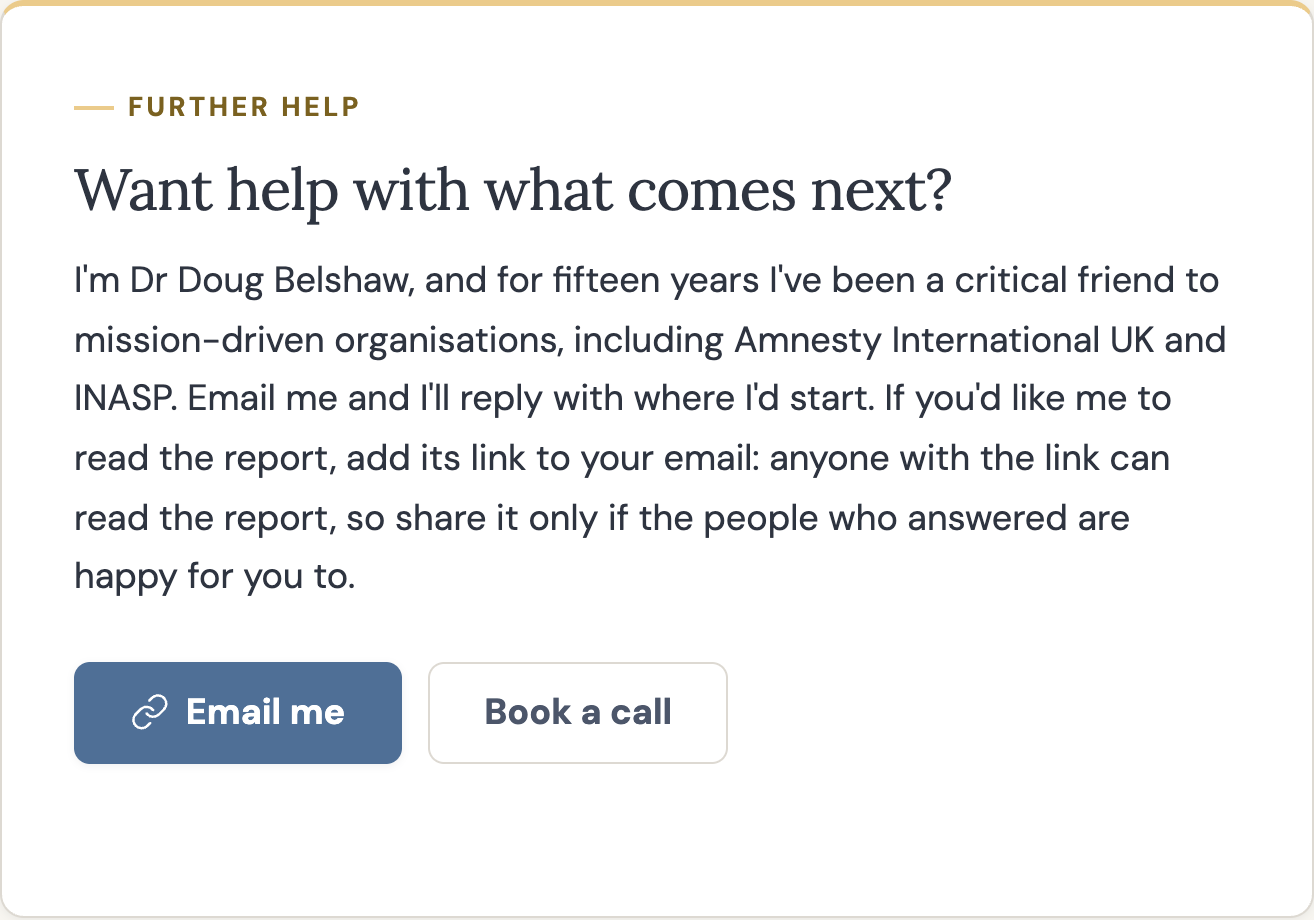 I'd love to hear what works, what doesn't, and what the report got wrong. Email me or book a call.
How OrgLens came to fruition
Interested in the technical details? Check out these development posts:
- Can an AI agent do systems thinking?
- Making an organisational health check people can actually use
- Teaching a tool to be careful, then giving it more than one lens
You may also like
- Sightlines – Three interactive systems-thinking tools for people working in mission-driven organisations. Each guides you through a short conversation and builds a live diagram as you go.
- Watershed – A five-minute check on how well part of your organisation works as a system. Rate plain statements and see which self-reinforcing loops your answers point to.
You can find all of the tools I've built at dynamicskillset.com/tools/