What I learned at MozFest 2026
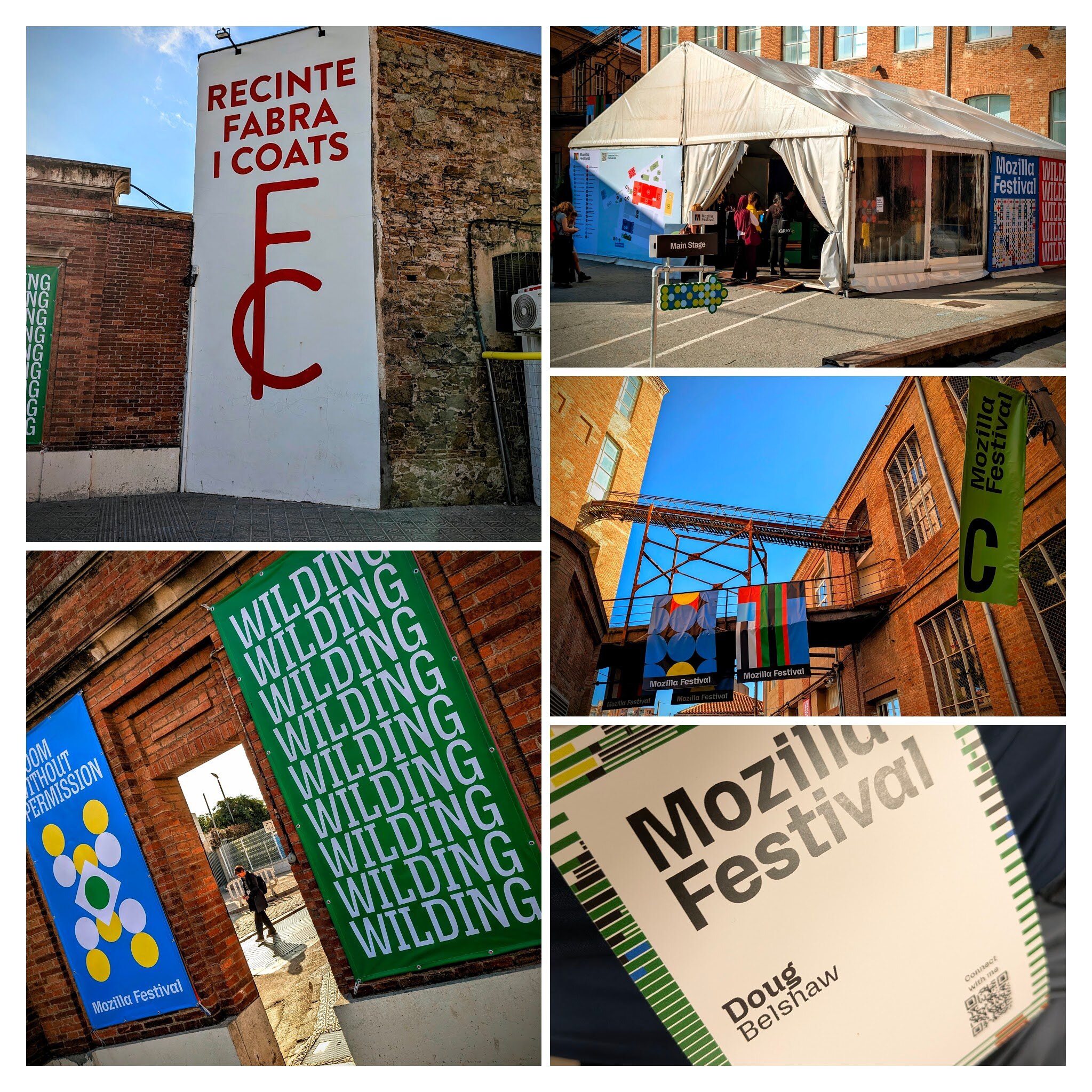
I had such a great time at the Mozilla Festival in Barcelona this week. It's a cliché, but one for good reason, that the best experiences are in the "corridors" of events rather than in the sessions themselves. That was certainly true for me, despite the fact that I also enjoyed the sessions I attended. It was held at Recinte Fabra i Coats which was a former textile factory and such a better venue than last year.
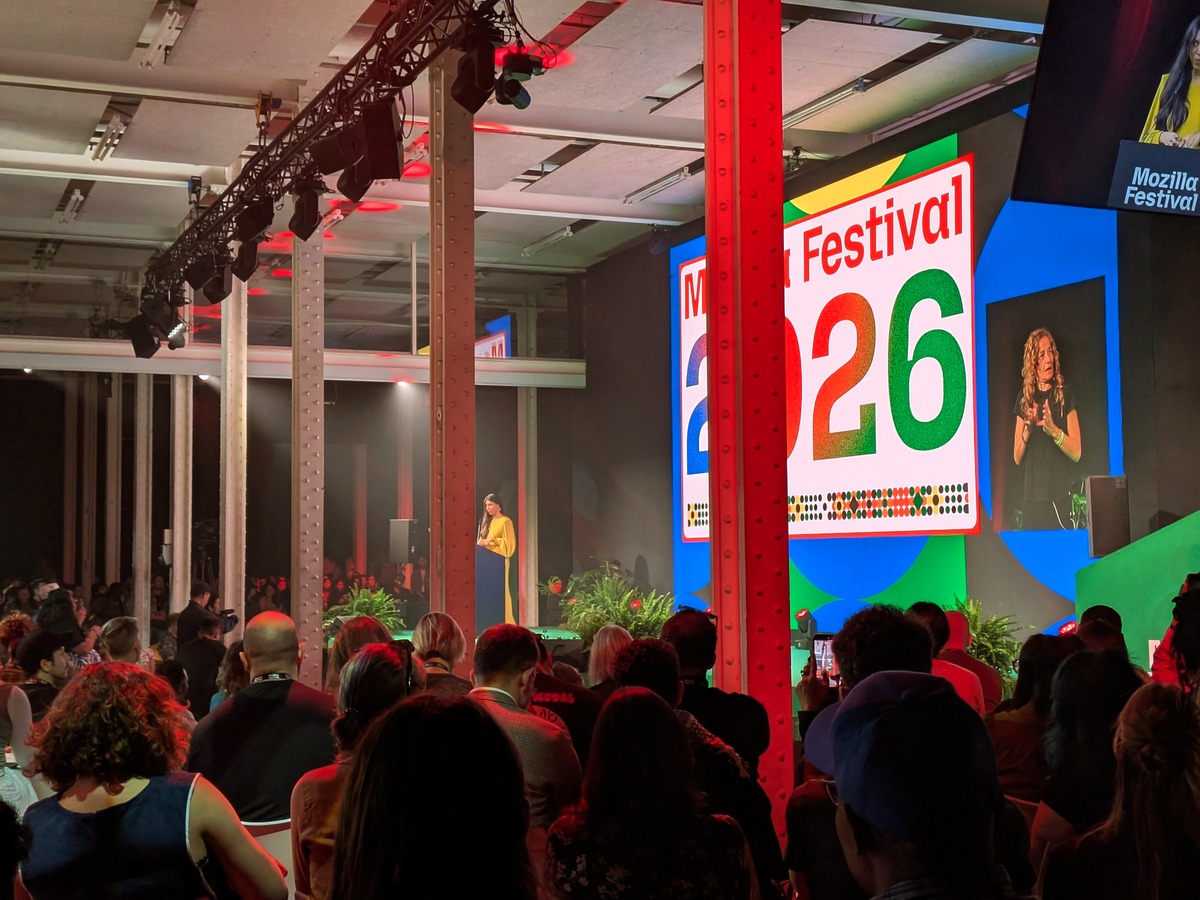
The thing about MozFest is that it's full of people I either know or want to know: talented people doing valuable work in an optimistic way. Gathering together in the sunshine at a fabulous venue acts as even more of a catalyst for that.
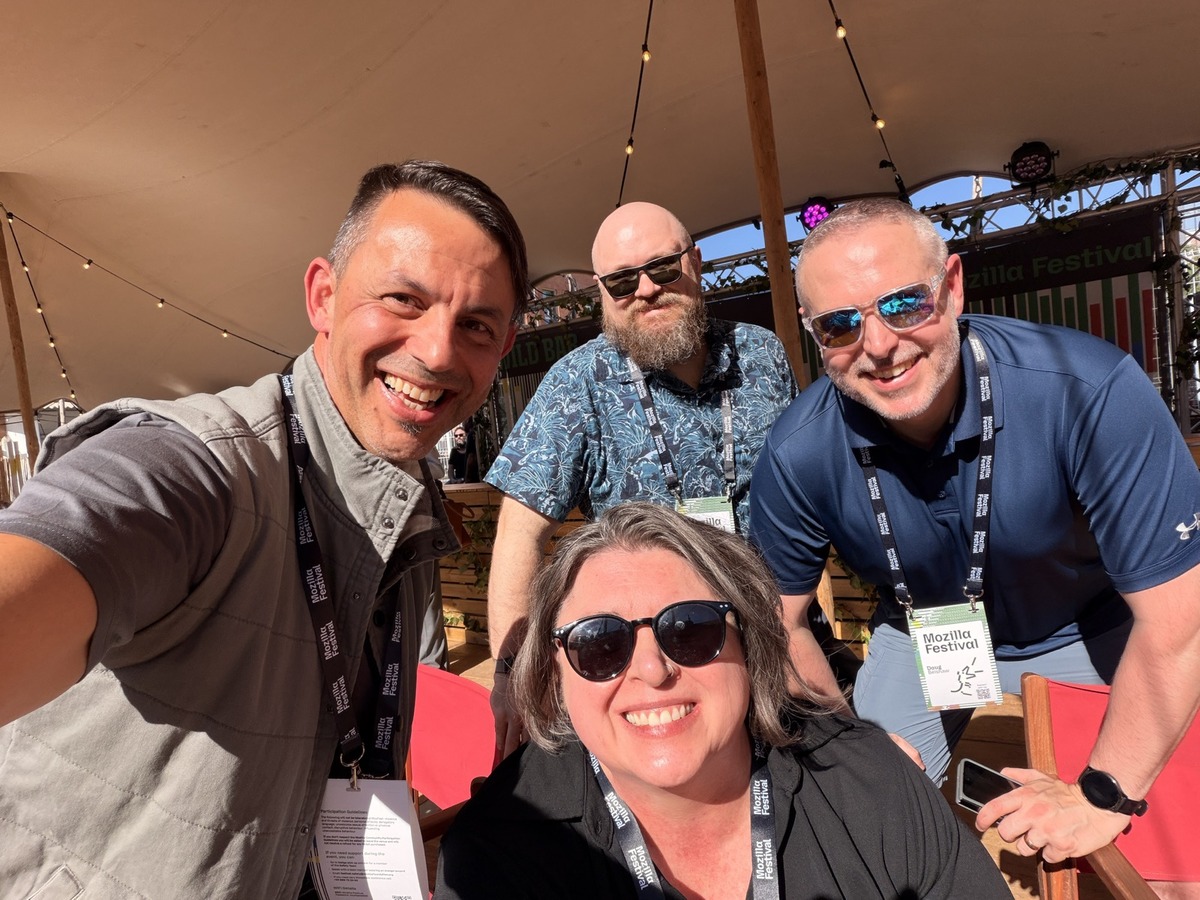
Photo: Simone, Kerri, Nate, and me – OG badgers! I went to a couple of sessions featuring Kerri and Nate and perhaps will write those up separately so as not to get too in the badging weeds in this post...
The vibe got going even before I landed in Barcelona, for a couple of reasons. First, I was in Toronto for a Mozilla Alumni gathering in early October (see Weekstarter 41/2026) which had been a fantastic experience. Second, I met Peter Wilson in Newcastle Airport before we even boarded our delayed flight. It turns out that having Mozilla.ai stickers all over his MacBook was a bit of a giveaway, so I went over and had a chat.
We talking during the event and even ended up on the same flight home, where we were sat near each other. So I learned that Mozilla.ai is developing Otari, which is a bit like OpenRouter in that it allow you to route inference to various models. There's a bunch of other useful tools listed at Mozilla.ai docs, too. I'm going to start using any-llm when building new products and services as it makes it really easy later to switch out providers or route things differently.
It turns out that Peter, who lives only a few miles away from me, is pretty aligned with what Tom Watson and I are doing with FIELD STATION, and in particular, the Digital Sovereignty Unconference we're planning for early next year. In a recent blog post entitled AI Growth Zones: Gift Horse or Trojan Horse? he shares these very TechFreedom-esque lines:
I increasingly think AI infrastructure should be treated like other utilities: water, electricity, transport. Something too important to leave entirely to market dynamics and shareholder returns.
And here's the concern: AI infrastructure has natural monopoly characteristics. Once a hyperscaler owns the datacentres, the power contracts, the cooling infrastructure, and the talent pipeline in a region, competition becomes very difficult. You can't easily run a competing set of cables and cooling systems. The switching costs become enormous. And by then, they also have your data.
That doesn't necessarily mean public ownership of everything. Shared ownership models could work, where a percentage is privately held but the community stake grows over time as the initial investment is repaid. Co-operative models could work for smaller-scale infrastructure. Municipal ownership could work for community datacentres.
What concerns me is accepting the default assumption that private ownership with no community endpoint is the only option. We tried that with water. We're watching the consequences flow into our rivers.
Good stuff. He also shared Freehold with me as well, which "keeps your data on your own devices, lets your own AI work on it, and enforces your rules with maths rather than promises."
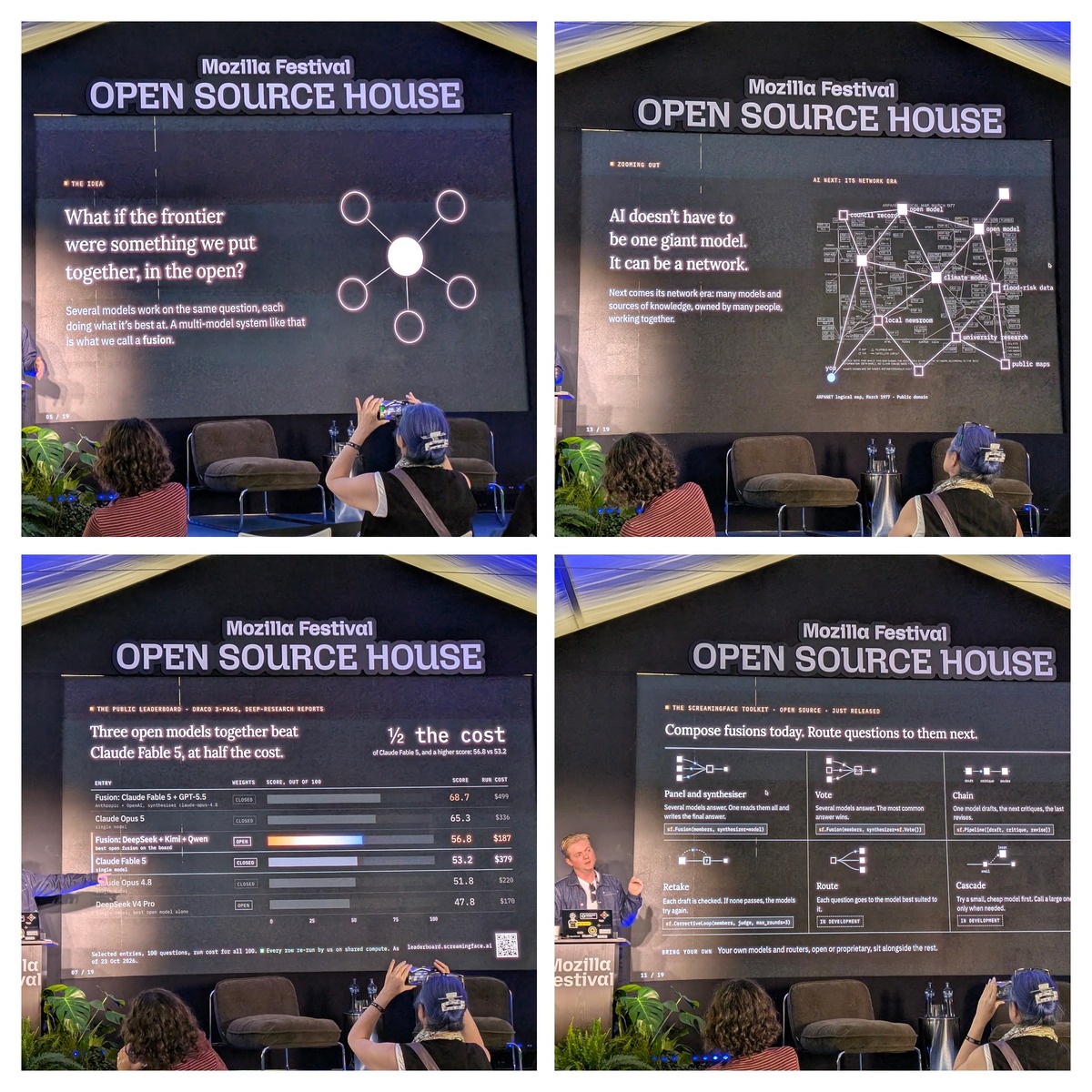
On that note, I caught a great presentation in the Open Source House tent, where Dave Buckley from OpenMined gave a stellar presentation on a new project of theirs called screamingface.ai. It's a fantastic idea, and hopefully you can see what attracted me to it from the photos above. Essentially, it conceives of current AI as being akin to the 'mainframes' of the past, whereas AI can and should be a network (top-right image).
To that end, as Dave showed (bottom-let), combining three open models can beat a frontier model, at half the cost. It doesn't send your data to Big Tech providers, and it adds in a resilience layer. If Claude goes down, you're shafted. If you're running a combination of models, it keeps on working. In addition, models can be routed in interesting ways meaning that they can check each others' work, etc. (bottom-right)
Another interesting session in the Open Source House tent was a presentation from Air messenger. While I missed the start so don't know the guy's name, he was explaining how it uses the Messaging Layer Security (MLS) protocol and – unlike, say, Signal – sees a federated server approach as a benefit. From their privacy page:
Air’s security model is to take the server operator out of the equation as much as technologically possible, so that users can always be sure their communication is protected. Air uses state-of-the-art cryptography, and the source code is available to the public. This means that Air’s commitments to security are verifiable, and anyone can review the source code.
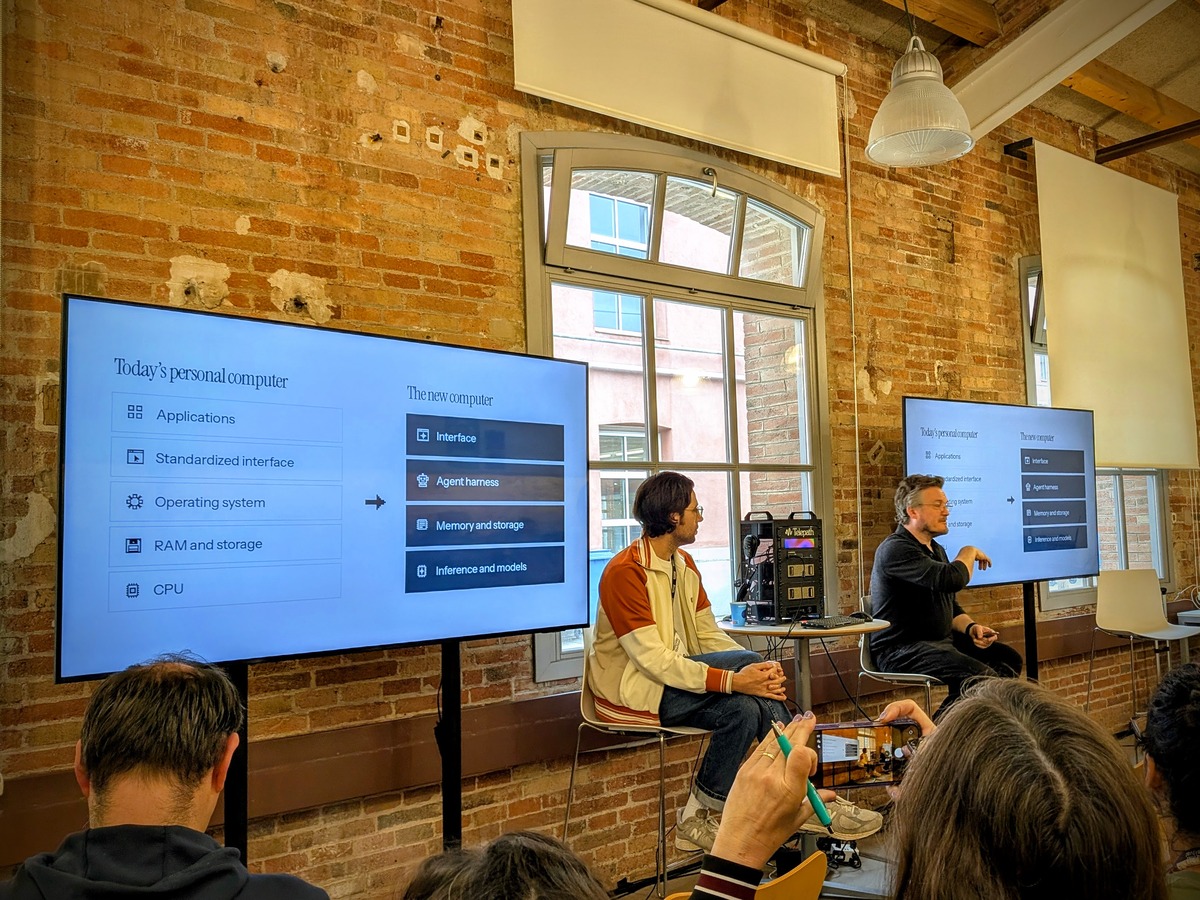
Another really interesting session I went to was by MozAlums Stephen Hood and Rupert Manfredi, who have founded Telepath. They'd brought along the Telepath Alto (which you can see between them in the photo), a computer so powerful they had to apply for export controls for a supercomputer to take it out of the USA!
Their product, Television, is "the missing GUI for personal agents" and provides a different interface for interacting with your computer. Stephen gave a pretty slick demo where he interacted entirely using voice commands with one of the latest open source models running locally on the Alto. Television creates dashboards and interfaces on the fly.
It was pretty impressive. I need to spend more time thinking about it, but meanwhile have built it from source on my Linux laptop and had a play. There's a native macOS version that I'll experiment with next week. I also ended up sitting next to a guy from Tiles, a Mozilla Ventures-backed company which provides " local-first, collaborative AI assistant that works for you" which is built with open models on the AT protocol (also underpinning Bluesky)
One thing I noticed at MozFest which was a crystallisation of something I'd felt but not articulated before: I don't like panel sessions. The only thing I find that they're useful for doing is bringing the audience's attention to things like ROOST, Code Carbon and Alpha exist. Otherwise, they're not a great use of everyone's time.
As I commented on LinkedIn after the first one of these I ended up walking out on:
I love presentations, demos, discussions, almost every event format. Except panel sessions.
I've been to literally hundreds of events in my career and seen maybe two good panels. It doesn't seem to matter how good the moderator or the panellists are, the very format is just weird and rarely conducive to the audience leaving enlightened, energised, and informed.
If you think about it, unless you prepare them well, panellists are expected to find overlaps, synergies, and tensions in each others' work within a very short time frame, and on stage in front of an audience.
If I was running an event I wouldn't include panel sessions unless you heavily prepared both the moderator and panellists. But is that amount of prep worth it?
Curiously, one of my favourite formats feels like a micro-panel but is actually something entirely different. That's a 'fireside chat' and there was a great one featuring Mark Surman, President of Mozilla and Valérie Pisano, President and CEO of Mila. It was a really enjoyable discussion and, in passing, Mark mentioned a book entitled When Old Technologies Were New which documents how the invention of the telephone "disrupted established social relations... and how society tried to bring it under a carefully prescribed pattern of proper usage". There's obvious parallels there to AI.
While talking about things to learn from, I had the pleasure of talking with Laura Mastwijk and Maria Ottoson who knew each other from a facilitation retreat they'd done together. They're now studying u-lab: Leading From the Emerging Future which looks interesting and related to my interest in systems thinking.
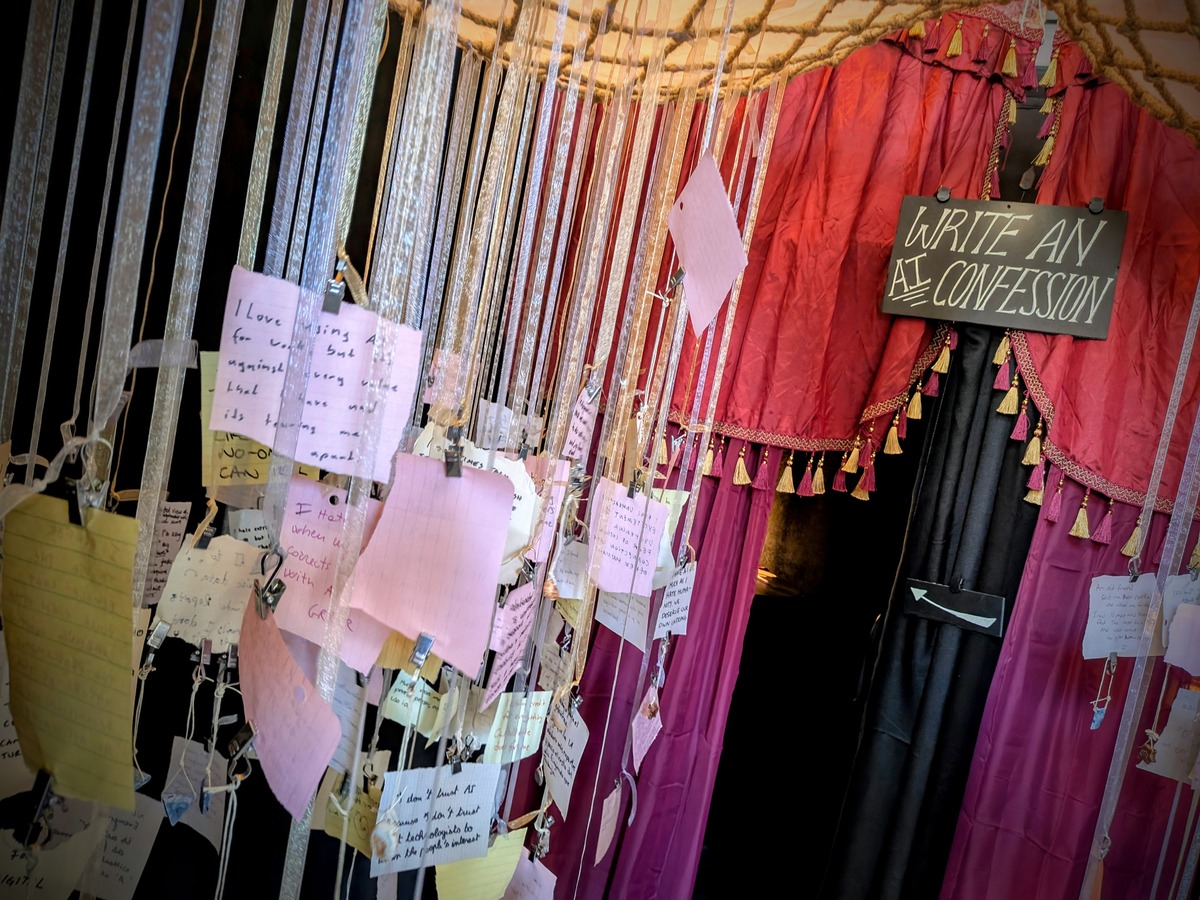
I'm loath to mention people other than those I've already mentioned by name, as I know I'll miss someone out. But a shout out to Noam for conversations while we hung out together at the Airbnb we shared. It was a shame Tom couldn't make it too, but he had some things he needed to sort out, last minute, at home.
Before MozFest, I added everyone I knew who was going to a Signal group, made everyone an admin, and encouraged them to add people they knew who were going. The result was increased serendipity, and some great tapas with some people I knew and some I didn't. Many thanks to Alina for being our local guide!
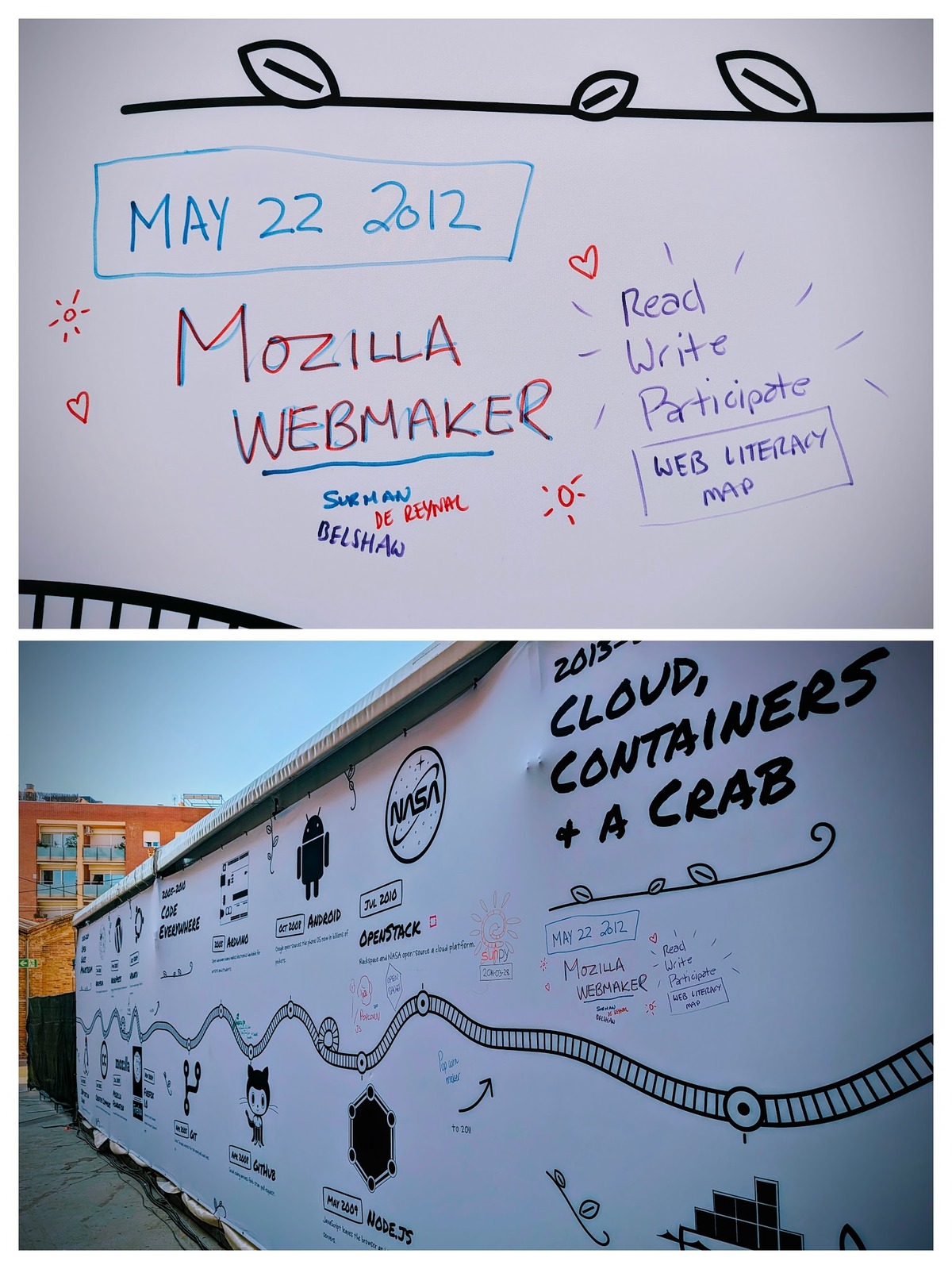
The Open Source House tent was covered with a timeline of open source related tech. Participants could grab a pen and add their own contributions. Mark Surman encouraged me to add to what he and Laura de Reynal had started around Mozilla Webmaker, which my work on Open Badges and Web Literacy contributed to between 2012 and 2015.
Joining Mozilla was an unexpected twist in my career in 2012. It completely changed the trajectory I was on, and I'm thankful to have reconnected with the community. Now, more than ever, we need open options to Big Tech enclosure and, to use a prevalent metaphor from the festival, to be the roses growing through the cracks in the concrete.
Enjoyed this? Get new notes by email
A digest of new notes, daily, weekly or monthly. Confirm by email, unsubscribe any time. Prefer a feed reader? Subscribe via RSS.
Around this note
Grows from
Shares soil with
Suggested by AI from similar content