← All notes

#systems thinking

October 2026 2 notes

ideas updated 9 min read

OrgLens: 2. Making an organisational health check people can actually use

AI summary

Doug has been developing OrgLens, a tool for organisational health checks, to make it more accessible to people without a systems thinking background. He has made progress in creating plain-language reports that are easy to understand and trust, by incorporating checks and using ordinary language to describe findings. The tool has shown promising results in tests with fictional organisations, but Doug acknowledges that there are still limitations and caveats to be addressed, including the need for human evaluation and validation.

…

ideas updated 15 min read

OrgLens: 1. Can an AI agent do systems thinking?

AI summary

Doug has been experimenting with AI tools, specifically Raven, to see if they can help with organisational diagnosis using systems thinking, particularly the Viable System Model (VSM). He found that the AI agent was better at modelling than expected, but still made similar mistakes to people, such as choosing the wrong level of recursion or swapping certain system components. Doug concludes that an agent can make a credible first pass at modelling an organisation, but honesty and transparency need to be designed into the process.

…

August 2026 1 note

ideas updated 15 min read

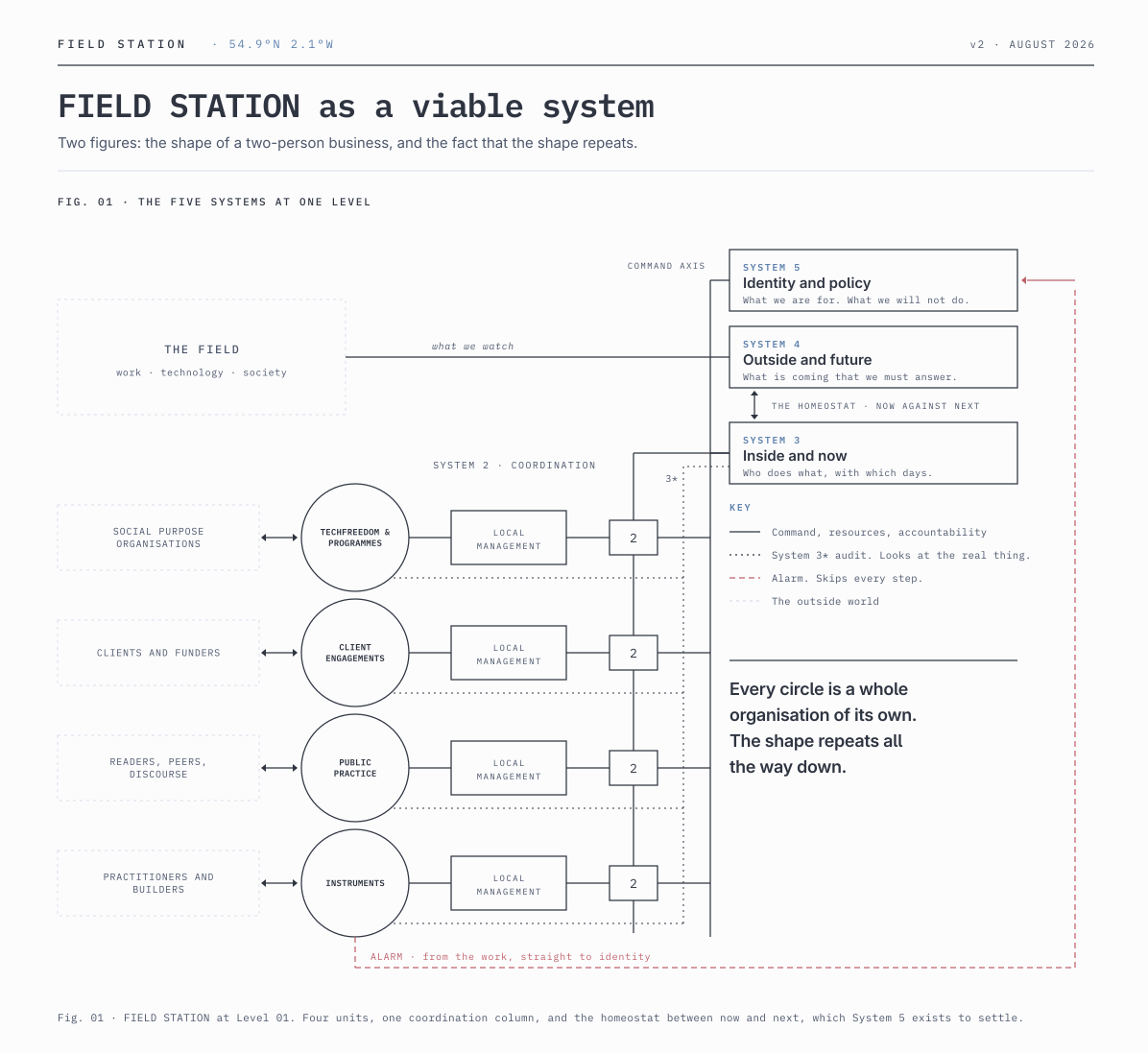
FIELD STATION as a viable system

AI summary

Doug's note, "FIELD STATION as a viable system," discusses the application of the Viable System Model (VSM) to build a sustainable business for FIELD STATION, an action lab investigating the future of work, technology, and society. The note outlines the five systems of VSM (Systems 1-5) and how they apply to the field they work in, which lacks System 2 and System 5 coordination and identity, respectively. Doug suggests that TechFreedom, a program they offer, can help supply some of what's missing, acting as a System 2 and System 4 instrument for other organisations. The note also covers coordination, decision-making, and identity within FIELD STATION itself, as well as the potential role of AI in meeting the "requisite variety" in their work.

…

June 2026 1 note

ideas updated 5 min read

Problem-solving with TRIZ

AI summary

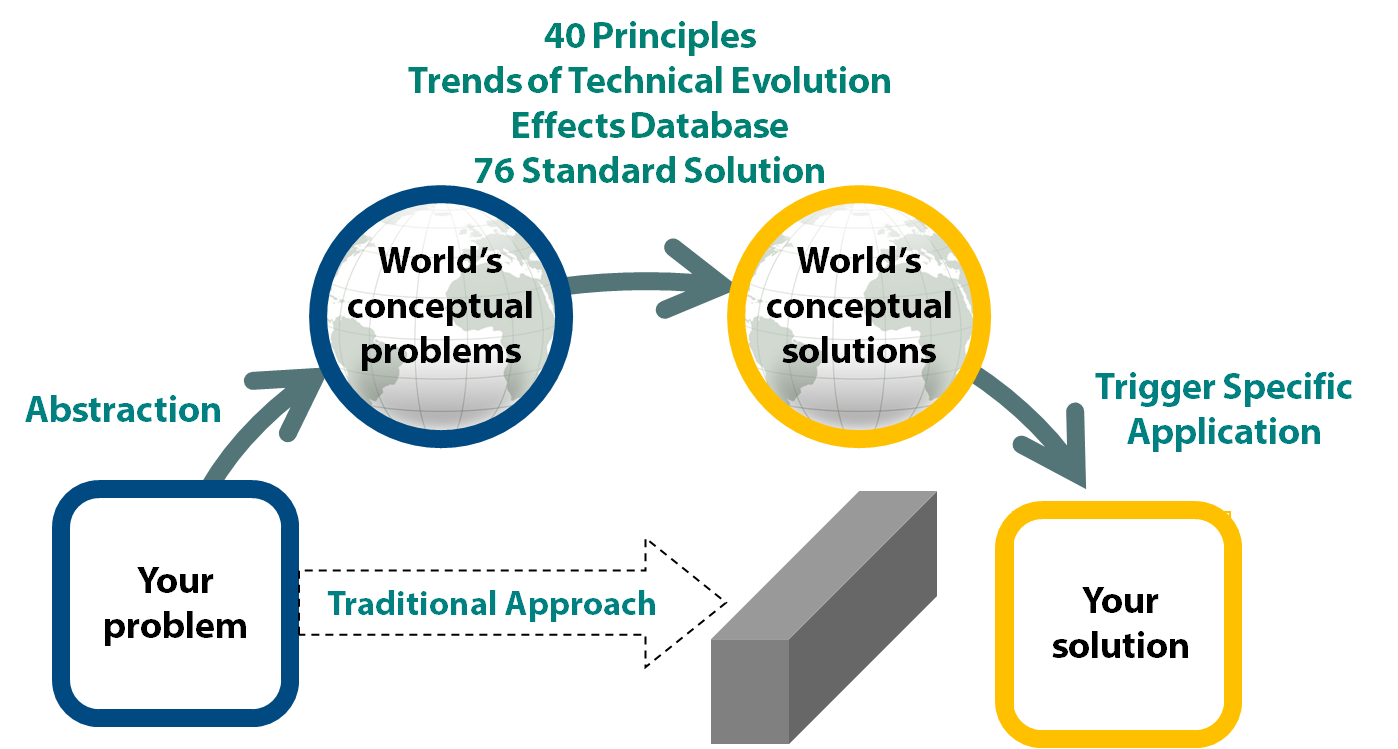
TRIZ is a problem-solving methodology based on studying global patents, boiled down to three core ideas: contradictions drive hard problems, resolving them requires separation in space/time/scale/condition, and the ideal state is delivering function with no system. The 40 inventive principles collapse into 7 families, and the author applies this framework to their own work in sovereignty consulting, facilitation, product design, and mission-driven organizations.

…