
Highlights from 'A Philosophy of Shame'
I'm on holiday and so reading more, both fiction and non-fiction, as well as actually watching films (I subscribed to Mubi).
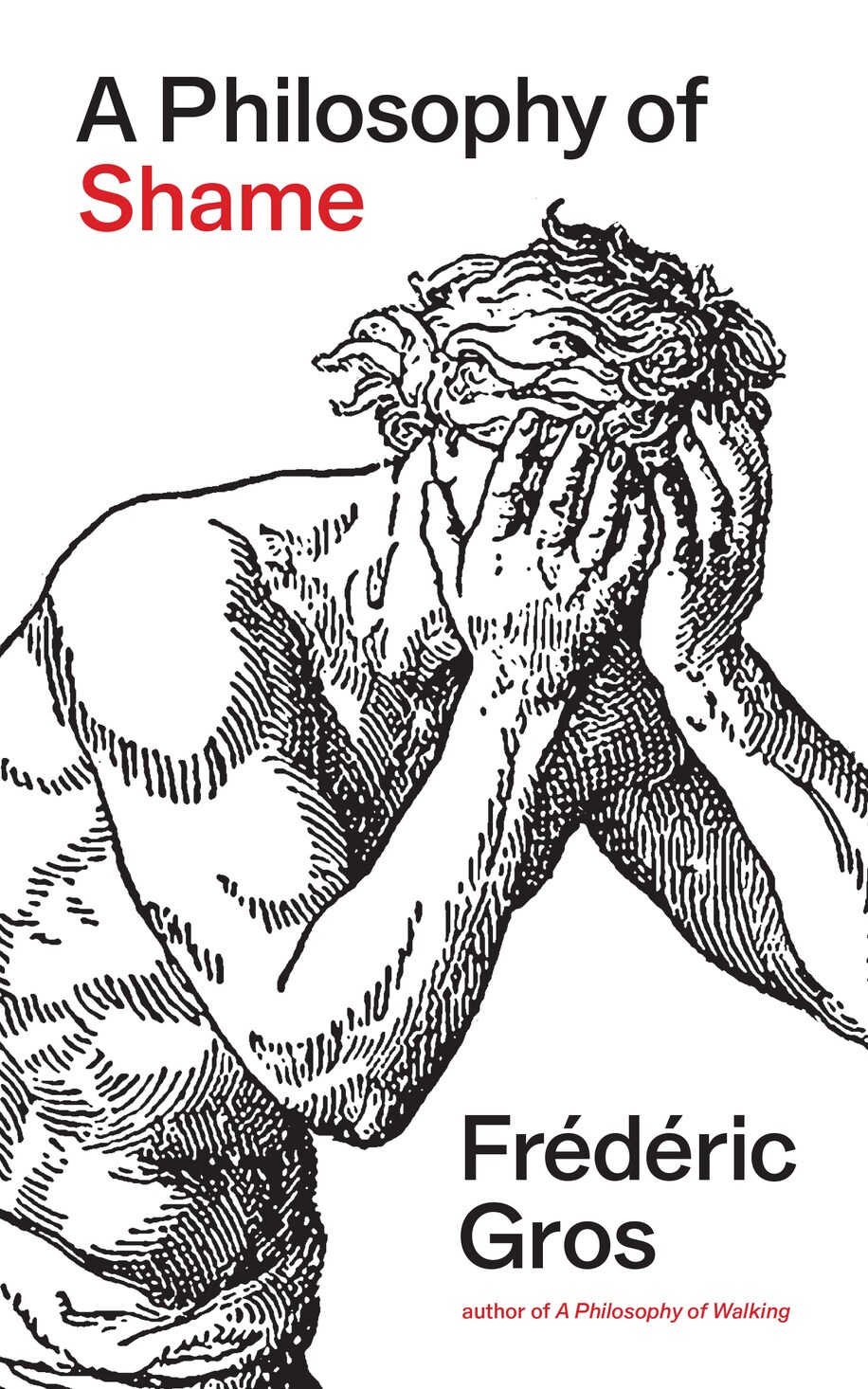
I've just finished reading A Philosophy of Shame: A Revolutionary Emotion by Frédéric Gros. I really enjoyed other books by him, and so was looking forward to getting into this one after receiving it as a member of the Verso Book Club.
What follows are my highlights. There's plenty to process in the full (short) book, which I'd very much reading.
Foreword
Shame is the major emotion of our time, the signifier of new struggles. The battle cry is no longer injustice, arbitrary treatment or inequality, but shame.
— p. 10
Shame is an amalgam of sadness and rage. It cannot be outgrown, whatever the life coaches might claim, but it can be transformed into anger.
— p. 13
2. Societies without Honour?
With the centralising of power came a rational obligation on subjects to obey the law (rather than observe a sacrosanct family code) as well as a state monopoly on justice. Channels of private vengeance were frowned upon and proscribed in favour of judicial resolutions sanctioned by a sovereign. Later on, liberalism placed the emphasis on individuals and their rights and freedoms, loosening the constraints of family and religious duty. And then capitalism came along and largely cast aside the symbolic import of debt, acknowledging only mercantile and monetary transactions: Everything can be bought, sold, negotiated, sold on and sold off.
— p. 24
What Michel Foucault sought to reveal and critique in his analysis of power and theory of norms is something that lies this side of public institutions, legal authorities, the judicial system and the law, namely the diffuse and irresistible power of respectable families who, in the name of the ‘true’ and the ‘natural’ and with the indulgent help of psychiatrists, have constructed the empire of the normal.
— p. 25
Normality is not a statistical pattern or a simple average, but a model of respectable behaviour. Normality is what passes for honourable in our honourless societies.
— p. 26
One might have thought that hyper-modernity – combining the emancipation of moral attitudes from the 1970s onwards, with the insistent promotion of individual rights, the rise of libertarianism and the widespread adoption of sexual practices that had once been considered unmentionable – put the final nail in the coffin of the Victorian family and its shame-based values. But, with the development of social media (Facebook, X, Instagram, and so on), contemporary societies have added a new (digital) dimension to one’s public image, which can now be quantified and fluctuate up and down like share values. Everyone on the internet puts themselves forward, tries to get noticed, brags, sells themselves, hones and embellishes their image, takes liberties and flaunts themselves. For every post, there will be a generous helping (or paltry handful) of ratings, comments and likes that will comfort or irritate the author, and cause pain or pleasure.
— p. 27
3. Social Disdain
Society is a system for designating allotted places, and humiliation puts everyone in their place and makes them aware of their inferior status. The experience of shame is first and foremost one of being reassigned.
— p. 33
As is well known, even the most ancient philosophies condemned wealth as false, inauthentic, inessential and immanent (later on, people would call it alienating). But it is one thing not to seek out luxury and to preach austerity and moderation, and quite another to voluntarily deprive oneself of it and to plough a lowly furrow with the same rage and fervour as so many others amass profits.
— p. 38
The point worth retaining from these radical stances is that social contempt can be sidestepped, deflected and turned back on itself. It only provokes shame if I consent to it at a personal level – by internalising it, I recognise the legitimacy of the system that is condemning me.
— p. 39
4. A Ghost Story
It is always towards another person (whom I might have unfairly offended or cruelly neglected and whose pain haunts me) that I feel guilty. Whereas shame could be encapsulated in the refrain ‘me, me, me’. In realising that I am a hostage to the opinion of others, I become aware too that I am a slave to my own image.
— p. 43
Far from being a compact nucleus or a discrete identity, the self is encumbered with ghosts and is torn and divided.
— p. 43
In this context, shame takes the form of a downfall, a crashing into the rocks of reality: It is the moment when the pretentious person is unmasked or the overconfident child experiences failure and ridicule. It is the sorry defeat of somebody with a high opinion of themselves who hits the buffers of reality, which will always shatter their illusions of omnipotence. Narcissistic shame relates to this moment of defeat when the scales fall from their eyes.
— p. 46
And finally, there is a third type of shame that we will dub social-ideal that corresponds to Freud’s concept of the ego ideal. The ego in question here corresponds to how we would fervently like to be seen and spoken of by others. It involves the social role models that I endeavour to imitate – figures who are sometimes so exemplary, admired and revered that the disparity between me and them is crushing. I do not identify with these splendid individuals in dubious narcissistic orgies. Instead, they float all around me and inspire self-loathing. I am ‘not enough’ like this, ‘too much’ like that, simply ‘not as I should be’. I am constantly ashamed, but it is not the sporadic wounds inflicted by external reality that are the cause. Rather, I make myself feel ashamed through continually comparing myself unfavourably to others – an ambivalent soliloquy that merely serves to make me disappointed with myself. But should we view this as an acid that gradually corrodes my self-confidence or a healthy form of humility that enables me to move forward? An endless and inevitably doomed quest for recognition or a positive shaping of my character in relation to demanding role models?
— p. 47
Happiness (or rather the image thereof) can be depressing if it involves the enactment of an ideal.
— p. 49
Ultimately, we are talking parental projections or stereotyped desires. At times, my shame is less a case of not living up to my own standards than failing to meet the expectations of others. The shame of the daughter who does not succeed in life as her parents would have wished, the shame of not being the nice, cool guy who is popular among his peers. I prove myself unworthy by not obtaining the qualifications or salary expected of somebody of my social class. With a job that is not highly regarded socially, I fear that my friends and even my own children will think I am ‘not up to it’.
— p. 49
When you think about it, we spend an awful lot of our lives striving to make a good impression, making sacrifices for ghosts and forcing ourselves to correspond to what we believe to be other people’s expectations. An awful lot of time, in other words, desperately trying, with every fibre in our bodies, to exorcise or ward off these three forms of shame. Our absolute imperative is to dupe the world, even if it means lying furiously to ourselves.
— p. 50
Indeed, one might be justified in asserting that, in the present age, these three types of shame (moral, narcissistic and social ideal) are systematically superimposed, merging in a dizzying spiral rather than operating in a dialectical manner. In the age of dominant theories (when society was neurotic, or conventionbound, or guilt-ridden), these entities were tethered to stable points (the law structured the superego, norms shaped the ego ideal and sin contained the ideal ego) such that they formed three corners of a triangle: indissociable but separate. But, in recent decades, the existence in every domain (whether personal, professional or family) of an ideal of performance has triggered a dynamic that whizzes them all up together: There is a tyrannical injunction (superego) to love oneself (ideal ego) courtesy of the social recognition that goes with a well-regarded and fulfilling job (ego ideal). So-called neoliberalism, in its ethical dimension, is the creation of this spiral: Fulfil yourself to the max in your amazing job – that’s an order! The alternative is shame.
— p. 52
That is the faint background music that ultimately accompanies us throughout our lives, right to the very end. Not the crashing organ chords of sin and guilt, but the persistent chatter of shame.
— p. 54
If I closely examine what is my ultimate aim, it turns out that I am not really striving to be good and to fulfil the demands of a Supreme Judgement, but rather very much the contrary: I strive to know the whole human and animal community, to recognize their basic predilections, desires, moral ideals, to reduce these to simple rules and as quickly as possible trim my behaviour to these rules in order that I may find favour in the whole world’s eyes
— p. 54
An entire existence, right up to the last second, dominated by a fear of ridicule and pathetic strategies to win the favour of other people who actually could not care less, so preoccupied are they by their own efforts to come across well. But that is how it is: We spend an entire lifetime asking ourselves how we should live, talk, love and die. We are forever striving to make the grade, but in relation to what and to whom? Nobody has the faintest idea.
— p. 55
\
- Melancholy
It is actually passions such as fear, hate and sectarian worship that delineate and hive off a distinct community. Each defines a specific domain that is external to it: the outside (hostile passions), the transcendent (idol-worshipping passions) or the margin (shameful passions).
— p. 58
\
- Aidos
Overcoming shame and rooting out its causes is the stated objective of the purveyors of wellness and happiness. It is as if Nietzsche’s aspiration in The Gay Science has become our principal ethical injunction: ‘Whom do you call bad? Those who always want to put others to shame. What do you consider most humane? To spare someone shame. What is the seal of liberation? No longer being ashamed in front of oneself.’
— p. 95
Deference is a frame of mind that might be described as a quiet conviction that by respecting conventions and laws, one is contributing to social order.
— p. 96
I imagine the shame in advance so that I do not actually have to experience it. I imagine the discredit that a particular decision would bring upon me or the infamy associated with a particular act, and that image disturbs me. We project ourselves into all manner of scenarios beneath the gaze of other people, and those imaginings prompt us to erect a moral barrier.
— p. 99
Aidos is a self-generated experience: I nurture it through regular exercises and repeated mental rehearsals in order to shape my ethical rapport with myself.
— p. 102
9. Philosophy as the Great Shamer
Shame is always ambiguous.
— p. 103
Philosophy consists precisely of this kind of cross-examination. Prove to me that your knowledge is more than mere rote learning, your convictions more than the accumulated silt deposited by your family and friends, your judgement more than a reflex reaction – prove to me that they are deeply ingrained in your soul because they are the fruit of your own thinking.
— p. 105
10. Future Imperfect
The reality of our existence, and what makes us ashamed, is to be found in the midst of this commotion. For all our good intentions, bold resolutions and aspirations to greater self-discipline, what pops up around every corner is the unconscious: It is the implacable bane of our existence and dictator of our destiny. For all my bragging, grand declarations and stated ambitions, ultimately what I have actually achieved is this. And what will have thwarted me is not (just) bad luck, unfortunate encounters and missed opportunities, but the braking mechanisms within my own psyche. The unconscious in this sense is all that makes me ashamed – it introduces a disparity between what I believe I want and what ultimately I really want. We need only consider all our Freudian slips (which in fact convey a certain truth), all the anxieties that restrain us, and all our pathologically misplaced actions to appreciate that the unconscious is what writes our personal history.
— p. 113
What we call our past can be broken down into two streams of events: those that are conjugated in the past simple or present perfect and those that are conjugated in the future perfect. The past tenses (yesterday I did this, I ate that, I bumped into so-and-so) are used to describe anodyne, banal and dull events that initially leave a well-defined trace but are soon erased. And then there is that which writes our history: those experiences that burst disruptively in on the present moment, piercing and tearing its fabric. An encounter, an emotion or something said or read disturbs me, provoking an inexplicable anxiety, an undefinable malaise. I feel impotent because I cannot grasp the meaning of what is happening to me, or else it resonates with past experiences that left enduring mental scars but were never put into words. These are the events whose meaning has been deferred, as if they have slipped below the radar (the sensors and transformers) of language, and just because they happened before, it does not mean they are over. Impossible secrets and secret wounds await a future mental configuration that will give expression to them and perhaps result in their resolution. There is a widespread belief that psychoanalysis comes down to saying that everything is the fruit of one’s early years and that the past determines one’s future. But the lesson it teaches us is exactly the opposite and hence more enigmatic: It is one’s future that determines the past – a past that has not yet been realised.
— p. 114
To properly understand what this means, however, we need to make a distinction between the real and reality. The real is the event in its raw state – opaque, incomprehensible, dark and incomparable with anything else. And the real becomes reality when it is spoken, subjected to different interpretations and enmeshed in language. It only becomes reality long after it has occurred. Once again, we are in future perfect mode: The meaning of the past is supplied after the event.
— p. 115
Intersectional Shame
When Sartre talks of the ‘original fall’, he means becoming rigidly defined by particular events and having superficial labels attached to oneself. I only become aware of my ‘self’ beneath the gaze of the Other, who traps me in a stereotyped version thereof.
— p. 121
Intersectional shame is a state of consciousness and a condition of existence that alienates me from myself, penetrating more deeply than lifestyle questions or my relationships with others. I end up being able to relate to myself only through the sickly prism of shame: I constantly feel worthless, invariably a cliché and always out of place.
— p. 127
Shame is the state of being able to conceive of oneself only within the constraints (on one’s aspirations or abilities) imposed by another. The obstacles erected to my dignity, the barriers to my dreams and the restrictions on my potential become hardwired into me, alienating me from myself, holding me back and ultimately defining me. I am hampered by my own self, but a self that is the product of the painful splinter that others have planted within me.
— p. 128
\
- Systemic Shame
Being ashamed of being a man is also how Levi characterises his feelings after leaving the concentration camp, a phrase picked up by Deleuze who adds: ‘There’s no better reason for writing.’ Shame is the wellspring par excellence of thinking, creating, writing and doing philosophy.
— p. 129
All important concepts in philosophy involve an expansion of the mind. By engaging with them, we rise above that base crucible of humanity and open ourselves up to other perspectives and different life trajectories – we open ourselves up to thinking like an octopus, perceiving the world like a tick and feeling it like a jaguar.
— p. 131
This systemic shame – that is, the shame associated with being part of the dominant Establishment – cares nothing for my personal life choices or the values I defend. It is the shame of the heir to privilege and social dominance. But even alluding to it tends to get people’s backs up and make them feel uncomfortable. As soon as one raises the notion of systemic racism, systemic gender inequality or systemic stigmatisation, there is a defensive reaction which is especially noticeable among the spoilt (and sensitive) children of the baby boomers.
— p. 133
Shame ought to be the price to pay – the minimum in union dues that they should be expected to cough up – for the person born into privilege whose history is marked by slavery, genocides, colonial empires, discrimination against women and the exploitation of the most vulnerable. You can be sure that the vulnerable and dominated will have paid a more exorbitant price.
— p. 135
The eternal victors lap up heroic myths about their families and their country to obscure their own monstrous reflection in the mirror. They are so saturated with lies that they become ‘innocent’, in the sense that they are sincerely ignorant of the criminality of their acts. They simply do not see the suffering they are causing. Whether it be in terms of their career, marriage, wealth or social standing, they find constant confirmation that their success is based on their own merits.
— p. 136
The wound to the psyche that it constitutes and the negativity that it generates overshadow everything. It is like a second layer draped over reality that introduces perpetual hesitation. Conscience prompts us to rehash everything and rake over the ashes of the past (I should have done this, said that, and so on), trapping us in feelings of resentment.
— p. 138
Conscience reveals everything to be a comedy of masks and at the same time undermines conventional moral oppositions. It sets off a vibration that fractures fixed identities. Why, for example, would we not find accomplished models of humankind among drunks, prostitutes or losers rather than among all those ‘functioning’ types?
— p. 138
Shame is accompanied by reserves of lucidity that may be despairing but are also immense.
— p. 138