AI-engineered superviruses probably aren't going to kill us all any time soon
 Thank goodness for people like Claus Wilke, who writes so eloquently, unpretentiously, and reasonably about a subject he knows inside-out. Unlike, for example, Noah Smith, who apparently should stick to being an economist:
Who am I? Why should you listen to me? Well, for one, unlike Noah Smith, I have actually computationally designed viruses and other biological systems. Also, my day job involves developing and evaluating AI systems for protein and peptide design. So I know a thing or two about state-of-the-art AI tools in biology and about the challenges of designing and building functional biological systems. I also know a bit of virology.
The essay is worth reading in its entirety, but I know people's attention spans are short these days, our brains addled by short-form video and instant gratification, so here's some extracts.
I’m not discounting the possibility that at some point somebody may cause some harm with an AI-designed biological agent. But we need to consider scale. A disgruntled teenager could also get their hands on a fertilizer bomb and blow up a busy shopping mall. No AI needed. So damage on the scale of maybe a couple hundred to a couple thousand people dead, while devastating for the individuals affected, is not an existential threat. The question is whether a much larger attack is possible. Something that would kill millions of people. I am quite confident this is not something we need to worry about, at least not for another few decades.
Although we like to think that AI can do things that were previously impossible, there are, of course, fundamental laws of physics and biology:
In general, there are tradeoffs between how lethal a virus is and how easily it spreads. Consider the common flu (H3N2 influenza) and avian influenza (in particular, H5N1). H3N2 influenza transmits easily person-to-person because it targets a receptor that is located in the upper respiratory tract. H5N1 influenza, by contrast, targets a receptor that is located in the lower lungs. This causes more severe disease but limits spread. Epidemiologists have reasonable concerns about a potential H5N1 pandemic, but to date the tradeoff has held. We have not seen a civilization-ending H5N1 pandemic.
There is simply no good reason to believe that AI will magically be able to work around these fundamental tradeoffs of biology, that it could somehow design a virus with the lethality of H5N1 influenza but the contagiousness of H3N2. The basic science required to build such a thing has not been done. When people believe that AI could figure this out on its own, without first running extensive and expensive basic science experiments, they have left the realm of science and have entered what can only be described as religion. They hold a strong belief not supported by any evidence or causal chain of logic.
I love those last two sentences. Essentially, thinking that an AI is going to create a supervirus which wipes us all out is a form of magical thinking.
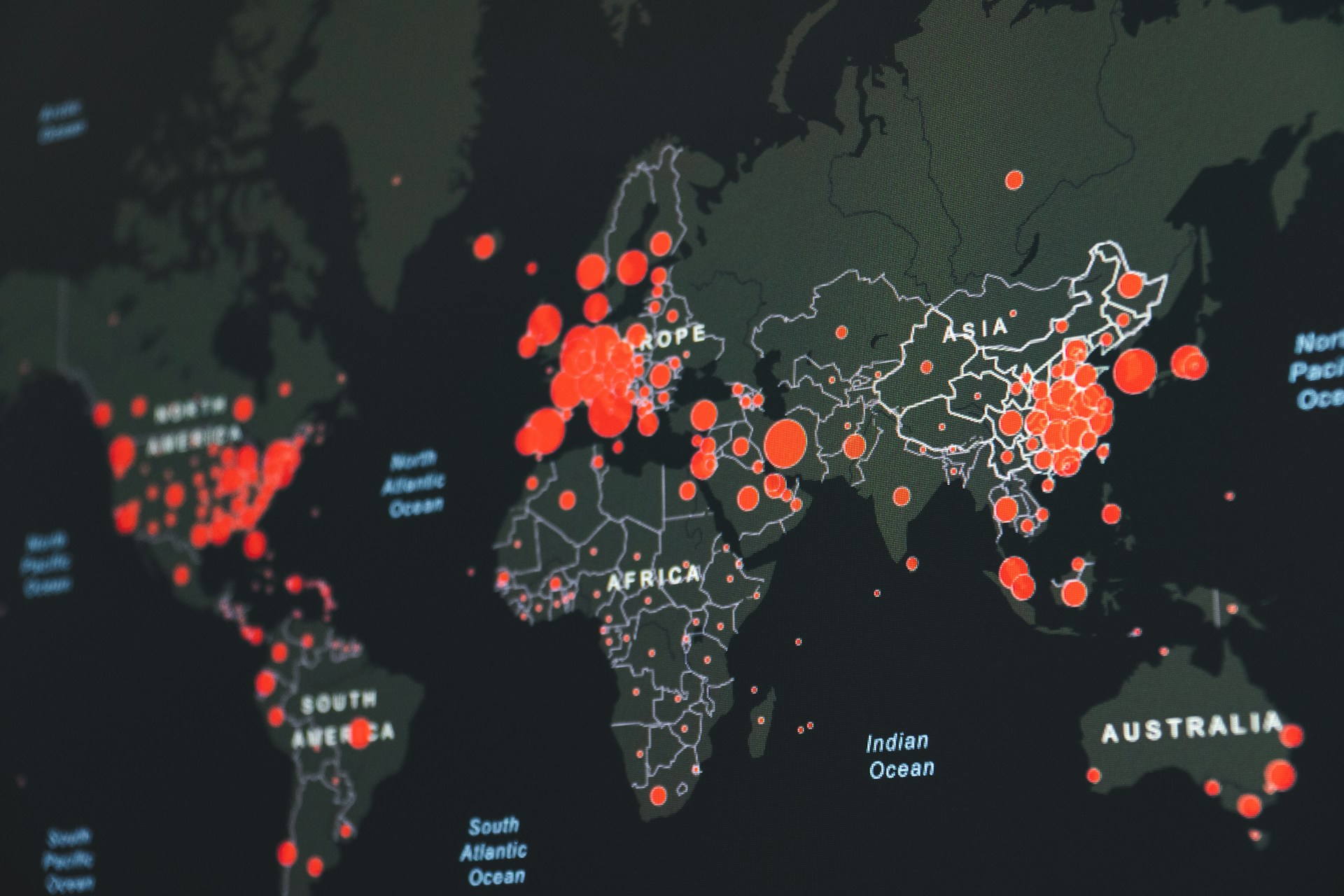
As Wilke points out, it's a lot more boring and mundane, but the things we should be worried about are things like COVID and measles outbreaks:
There is a Goldilocks zone of lethality for a pandemic virus that will cause maximum mortality, and it’s a level of lethality that is much lower than you may think. In fact, I think COVID was close to ideal in terms of a virus causing global morbidity and mortality. It caused sufficiently severe infections that many millions globally died, and yet its infections were also often sufficiently mild that people could just dismiss the virus and pretend it wasn’t an issue, thus contributing to further viral spread. Notably, COVID also had the property of asymptomatic transmission, where some people spread the virus without themselves feeling particularly sick or showing any symptoms. It was near perfect as a pandemic supervirus.
So, if you’re worried about AI-designed superviruses, think COVID, not Ebola. And if you’re now a little less worried, maybe you understand where I’m coming from. Yes, COVID was bad. But it did not end civilization. We’re still here. At least those of us who survived. If somebody actually designed a virus with AI, which I still maintain is virtually impossible, I doubt they could do more damage than COVID did.
The reason people fear-monger is because provoking a negative emotion leads to more clicks which leads to more engagement, which leads to more money:
What protects us from deadly viruses, regardless of their origin, is good public health practices and basic research. Ongoing surveillance to catch emerging pathogens early. Consistent vaccination against known pathogens so they are kept in check. Research into rapid vaccine development and into novel antivirals. Investments into improved indoor air quality and air filtering. Consistent hand washing. But this stuff is boring and doesn’t sell Substack subscriptions. Let’s be real. Fear mongering about AI superviruses is a much better strategy to make money online.
Great stuff.
Source: Original article · Are.na block · AI / Culture & Futures channel
Enjoyed this? Get new notes by email
A digest of new notes, daily, weekly or monthly. Confirm by email, unsubscribe any time. Prefer a feed reader? Subscribe via RSS.
Around this note
Shares soil with
Suggested by AI from similar content