September 2026 1 note

notes 1 min read

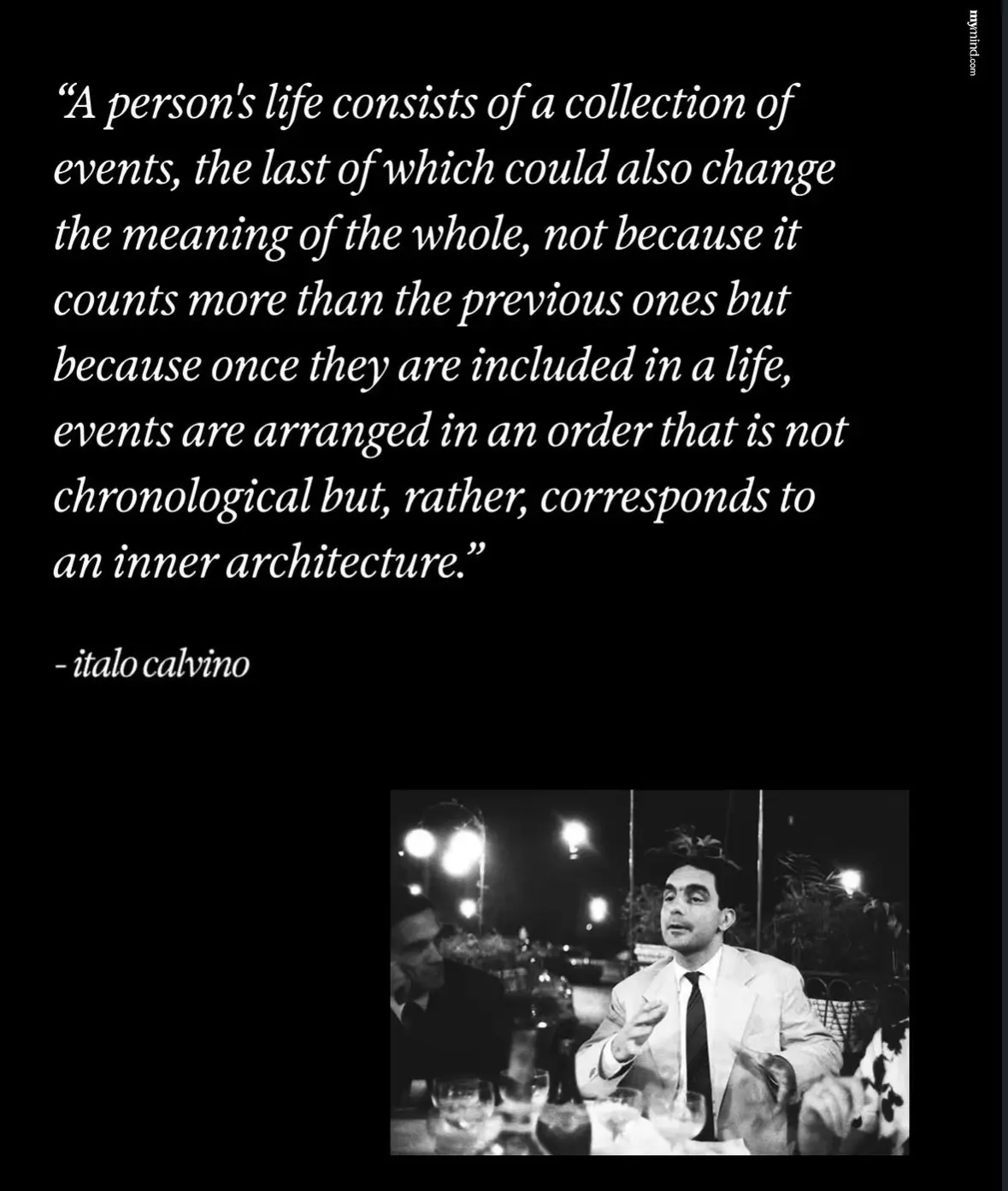
An inner architecture

This is why Aristotle thought that you can't judge whether a man was "happy" until after he's dead. And sometimes until long after he's died, because it would depend on the actions of, say, his offspring (which would reflect the way he helped raise them).

…
August 2026 2 notes

notes 1 min read

Death is a silence held at full volume for a very long time

It is not too far-fetched to link the silence at the end of a musical performance with death. In Moscow, on the gravestone of the Russian composer Alfred Schnittke is carved a stave with the semi-circle and dot of a fermata, the sign that indicates that a note (or in this case a pause) is to be held. Underneath is written ‘fff’ (one step above fortissimo, meaning very, very loud).

…
reflections updated 6 min read

To philosophise is to learn how to die

AI summary

Doug reflects on the value of re-reading books, particularly Michel de Montaigne's essays, as one ages. He highlights Montaigne's suggestion that we should frequently contemplate and discuss death, not fear it. Doug appreciates Montaigne's emotional honesty and practical advice, such as being prepared for death at any moment, metaphorically having one's "boots on." He also notes Montaigne's optimism about life's quality over quantity and the universal need to confront one's mortality.

…