
The term "AI slop" is sloppy
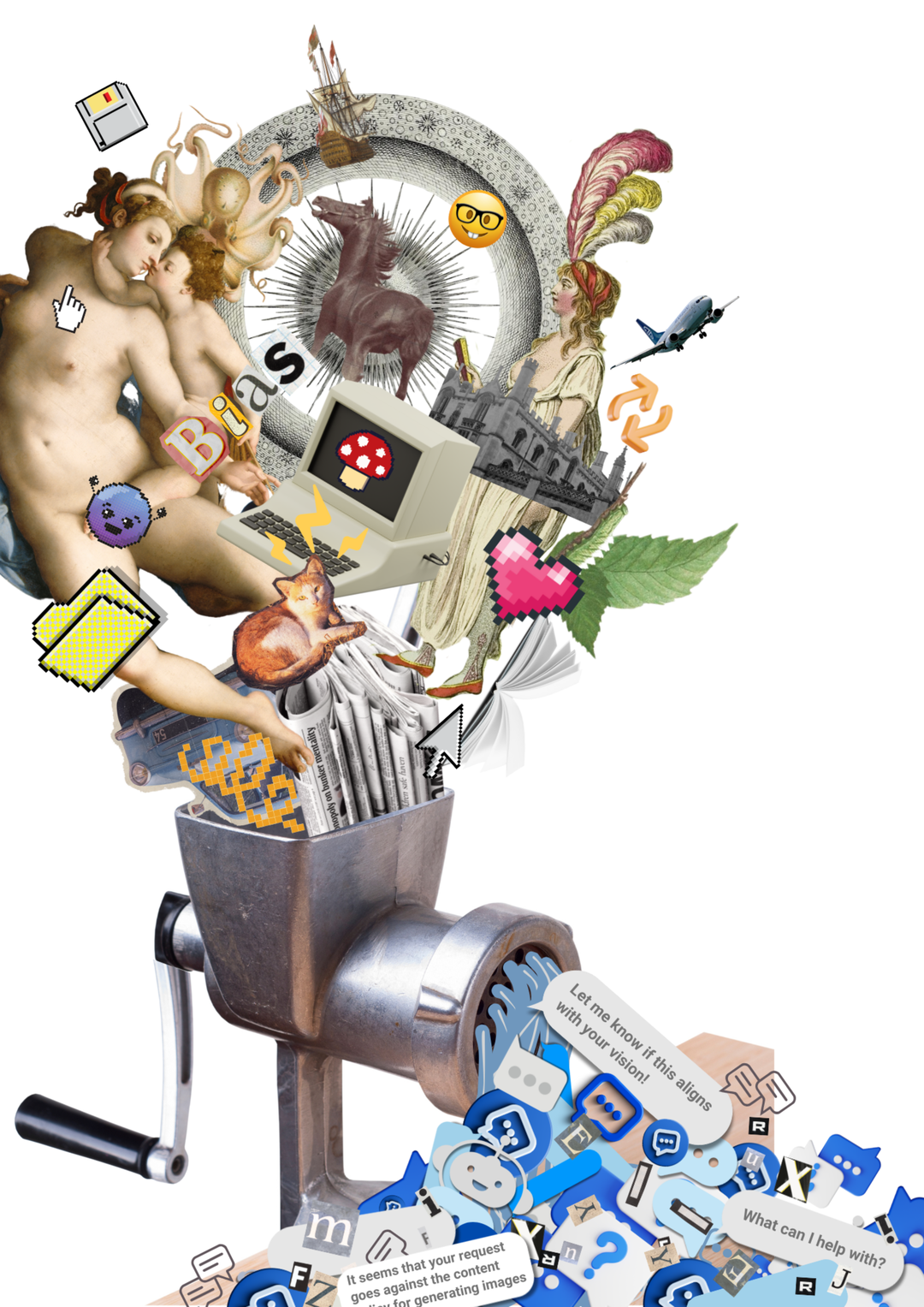
I am in agreement with Manoel Horta Ribeiro here: "AI slop" is an unproductively ambiguous term and we should be more specific in our critiques. There's a lot wrong with AI, and there's also a lot wrong with the mechanisms underpinning the ways in which we have constructed society and our relationships with one another.
To pin everything on a technology, rather than the structures which enable the things that you find distasteful, betrays a shallowness of thinking.
My concern is that the discussion, as currently framed, may not be very productive because it rests on an unstable conceptual foundation for what counts as “slop.” Kommers et al. define it as AI content that demonstrates superficial competence (it looks fancy), asymmetric effort (it is easy to make), and mass producibility (it is easy to automate). Each and every one of these traits is highly questionable as a way to describe the generative AI content that most people encounter on social media these days. (And dare I say, in general).
These definitions rely on fast-moving targets. Technology has historically made it easier to produce “content” that looks “better” with less effort (everyone has an amazing camera in their pockets these days). Filters, editing apps, stock music, and auto-captioning have all lowered the effort required to produce content that looks competent. Yet we do not usually treat CapCut edits as “slop.” Just think about how we changed how we evaluate written text. If a time traveler came back to 2019 with GPT 5.4, they could probably become an award-winning writer (yes, it would!). But we devalued AI-generated prose once it became widely available — even I, who am quite happy to use ChatGPT as a writing assistant, despise the “it’s not about X, but about Y” constructions that pop up all the time
Thus, “superficial competence” and “asymmetric effort” are only superficial and asymmetric given a specific moment in time. Given another baseline, all of TikTok since its inception would be described as such, regardless of AI. But mass-producibility is not a great descriptor of AI slop either. The pre-slop era is filled with channels with some mechanized voice reading a Reddit story while someone very skilled plays Subway Surfers. Or a quick narration of an older B-roll movie in 12 parts. Or very low-effort reaction to other content.
[...]
The more brutal reality is that the vast majority of short-form video content adds very little to people’s lives. There are literally dozens of accounts of people smashing things on a hydraulic press, with millions of views. The AI Slop discourse creates this line between high-quality, thoughtful content and “slop” that makes little sense on the short-form video platforms where this content flourishes. Still, creating successful content online is freaking hard --- I dare academics to try (I did), just to be humbled! Even though these videos seem silly, their success depends on deep understanding of the zeitgeist of short-form content.
Thus, let’s be done with the term “AI slop.” It is another case where we ascribe too much independent power to technology itself, much like earlier debates that treated “the algorithm” as a mysterious force rather than a name for specific incentives, designs, and human behaviors. Generative AI did not invent content farming nor the strange pleasures of short-form video. The way in which it changed the incentives to producing such content matters, but “AI slop” is the wrong name for the problem. It collapses too many different phenomena into a single sneer. It is, dare I say, sloppy.
Source: doomscrollingbabel.manoel.xyz
Are.na block: ↗
Collection: ai-critique-policy
Image: Janet Turra & Cambridge Diversity Fund