
Legitimisation, amplification, and the structure of permission
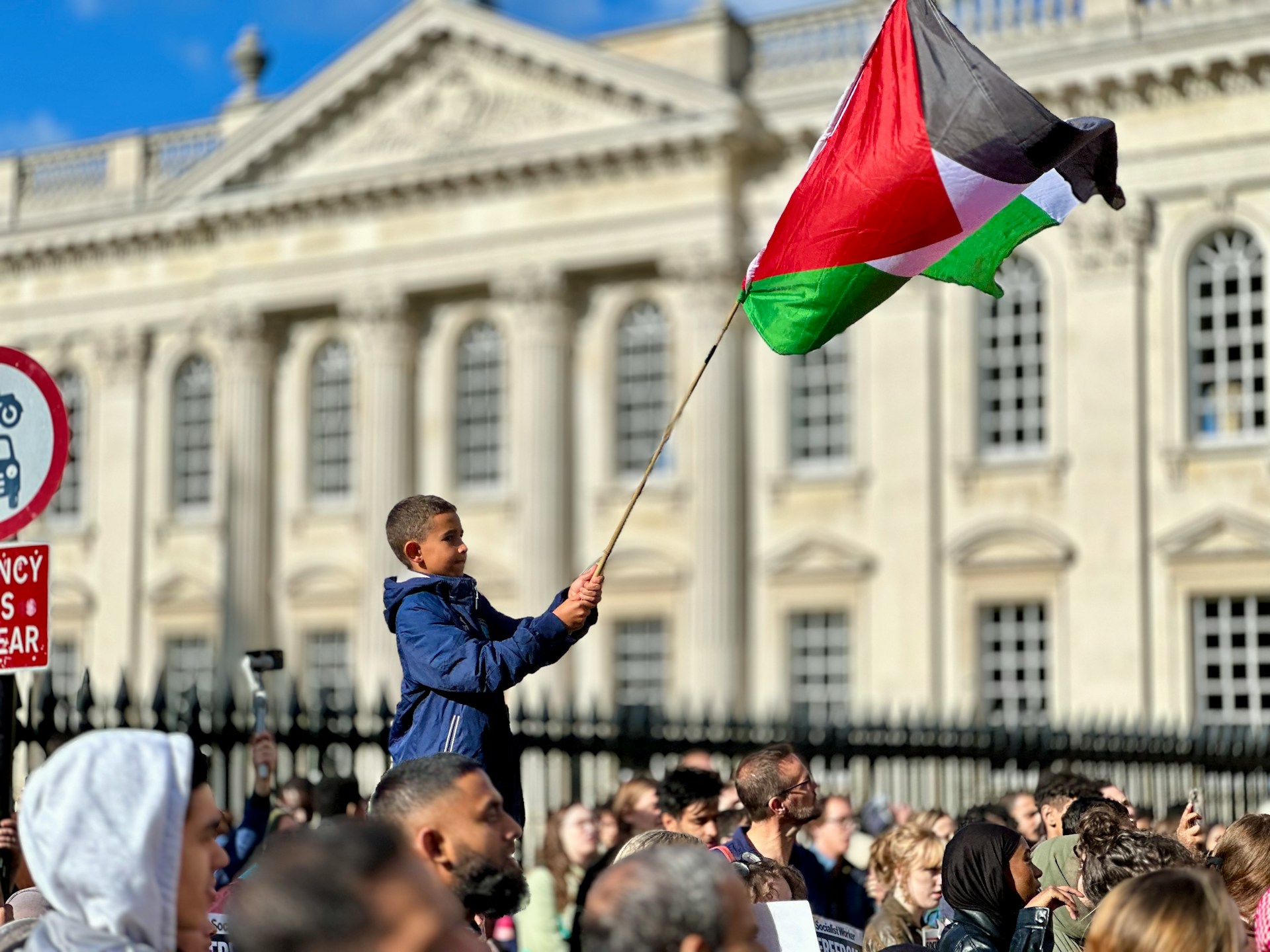
Laurens Hof writes about decentralised online social networks and does so very well, covering the wider social, political, and technical aspects. In his most recent post/newsletter he connects Elon Musk calling for race-based pogroms, the (unrelated) resignation of Keir Starmer as UK Prime Minister, and both the "structure of permission" and "amplification layer" that decentralised social networks could make even worse.
First off, Hof reminds us pace Weber that for something to be a 'state' means that it has final authority over what counts as 'legitimate' coupled with a monopoly on violence. As many have commented, it's interesting to see how the far right are dealt with compared to, say, pensioners holding up Palestine Action placards.
Hof says that the resignation of Starmer was unrelated to what happened in Northern Ireland and, ostensibly, it was. But underneath that, despite falling NHS waiting lists, actual impact on illegal immigration, and numerous other improvements, there is a feeling that the current Labour government isn't up to the task. That it's ineffectual and lacking dynamism. Hence Andy Burnham, someone who looks a lot younger than Starmer (there's only 7 years in it) being shipped in to take control of the ship so that it doesn't hit a big Reform-shaped iceberg in 2029.
It's not an easy job. Clamp down too hard on the far right and you give them a reason to push back harder. Don't clamp down enough and people think that you're hypocritical and not doing enough.
A short recap: on the 9th of June, following a stabbing in Belfast by a Sudanese man, anti-immigrant riots broke out in which crowds went door to door looking for houses occupied by immigrants and set homes, businesses and cars on fire. The riots were coordinated in part over social media, with figures including Elon Musk amplifying them to his two hundred million followers, and Musk going on to post, repeatedly, calls to ‘imprison the government’, and media characterising it as a ‘race-based pogrom. Eleven days later, Prime Minister Keir Starmer resigned, but interestingly enough, the riots and Musk’s calls to overthrow the government appear to have had nothing to do with that resignation.
[...]
Max Weber described that one of the core characteristics of a nation state is that it has a monopoly over violence in its jurisdiction. Crucially, Weber makes the distinction that there are two parts to this, that states must have a monopoly over the execution of violence, as well as the legitimisation of violence. Normally we think of the state’s monopoly on violence as being about physical force, with soldiers and police. But Weber’s point includes the authority to legitimise violence: the state claims to be the one entity that gets to say which violence is justified. Plenty of legitimisation happens outside the state, of course, with people arguing for and against the justice of this or that violence all the time.
What the state claims is that it holds the final authority over what counts as legitimate, and that this authority is part of what makes it a state at all. What is striking about the UK right now is that you can watch these two halves of the monopoly behave differently. The state still defends its hold on the execution of violence, moving within days when something is on fire. But the authority to legitimise violence is being exercised, openly and at scale, by something other than the state. And the most important point of all: the state is not contesting this new source of authority over violence that is operating in its territory.
Within a few days, 25 people were arrested in relation to the riots, with 17 charged in court. The coordination of the riots were partially done via social media, with people like Elon Musk and Tommy Robinson contributing to by sharing the location of protests, and Musk making posts like “Do not make peace with evil. Destroy it.” These acts of legitimisation were condemned in vague words by the UK government, with Starmer posting on X that there “is no justification for the violence and disorder that we saw threatening our communities, nor for those who encouraged it, online or elsewhere”. A spokesperson for the UK government said that there is “no change” to the Government’s policy on using X, and that there are no new plans to take action against X for its role in the violence.
This shows the split in the monopoly over violence. The UK government holds strongly on to their monopoly over the execution of violence, and it is capable of moving swiftly and decisively when something is physically on fire, charging perpetrators within days. But the legitimisation of violence is the part that is not touched at all, Starmer does not even manage to specifically say what happens.
To see the other side of this, it helps to know about Palestine Action. Palestine Action was a direct-action group that targeted arms manufacturers in the UK, in particular the Israeli weapons firm Elbit, mostly by damaging property, and in 2025 the UK government proscribed it under the Terrorism Act. The crucial part, for what follows, is what proscription does: it makes expressing support for the group a terrorism offense in itself, and holding a sign becomes chargeable with terrorism.
So the UK government is perfectly willing and capable of contesting someone else’s authority to legitimise violence. The six people charged with terrorism offences were charged for organising protests and holding planning meetings over Zoom. That is the exact same structural act as what Robinson did when he posted the locations of the protests. But the UK government sees one is terrorism, and the other is not even worth a specific sentence from the Prime Minister. Furthermore, a state that reads a sign by a pensioner that says “I oppose genocide. I support Palestine Action.” as terrorism, and does not read “imprison the government” as something worth pursuing is making a deliberate choice on what it thinks poses an actual threat to the state.
Hof then discusses an article that I was going to mention in a separate note but which I'll deal with here. Essentially, he's arguing that algorithms and boosts/retweets allow people to engage with things that immediately align on an almost visceral level with their current beliefs. That's unproblematic for a government when it's things which they deem already acceptable. But it's dangerous (to them) when it pushes against that legitimising power.
I would have liked Hof to explore this a bit further, and perhaps he will in upcoming posts/newsletters. For example, one of the reasons, I think, that the Saudis and very rich, very right wing people put up the money for Elon Musk to buy Twitter was because of its power to do this. Think of the short-lived Arab Spring, #MeToo, and #BlackLivesMatter. Amplification and legitimisation go hand-in-hand.
Robin Berjon wrote a great article recently about something he calls the Retweeting Class. He borrows the philosopher Timothy Morton’s idea of ‘retweeting’ ideas: the one-click mental process of repeating something you’ve heard without taking on board its structure or its consequences, something we all do sometimes. Morton’s distinction is not about originality, there is nothing wrong with using an idea you got from someone else, most ideas are second-hand, and that is fine. The distinction is about whether you have actually taken the idea on board. Retweeting an idea is the one-click version, where you repeat it because it sounds right and the people around you are repeating it too, without it really mattering if the idea is good or useful or true. Berjon’s argument is that there is a whole class of people, prominent ones with reach, for whom this is the entire mode of operation. They evaluate ideas not on whether they are true but on whether they are acceptable to the others in the group. Crucially, this means they never challenge power, because all they ever do is repeat what the existing structures have already digested.
The reason it feels strange that Musk’s post can both not matter and matter at the same time is that we are treating it as one thing, when it is actually two. There is Musk the individual poster, and there is the amplification structure that his post enters, and these have very different properties.
Musk the individual is, it turns out, in this specific context fairly replaceable, and the UK government may have correctly intuited this. If you removed Musk from the equation entirely, the post calling to ‘imprison the government’ would still find a vector. We can see this directly in the riots themselves: the coordination did not come from Musk alone, it came from a cluster of people. Tommy Robinson posted the location, and other accounts like Rupert Lowe or InfantryDort posted their riff on it, and Musk’s contribution was often a single word, ‘Yes’, sitting downstream of someone else’s post. Musk is a particularly effective node in that system, with his two hundred million followers, but he is a node, not the source. This is what Berjon means when he writes, in the context of France’s failed ‘French Response’ information operation on X, that you cannot beat Musk by out-posting him, because the thing you are fighting is not him but the structure.
This is the part that matters for thinking about what a state can and cannot do. If the legitimisation of violence were emitted by Musk, then it would be a Musk problem, and you could imagine solving it by going after Musk. But the legitimisation of violence is produced by the amplification layer, by the collective act of a retweeting class converting individual posts into a shared structure of permission. And that is a much harder thing to point at, because it has no single author and no centre.
It also explains something about the asymmetry I described earlier, the one where legitimisation of violence against immigrants flows freely while delegitimisation of violence against Palestinians is punished. Berjon’s observation is that the retweeting class never challenges power, because it only repeats what the existing structures have already digested. The legitimisation of violence against immigrants is, by this point, something the existing order has digested, pointing in the direction power already leans. So it propagates through the amplification layer without friction, picked up and repeated and amplified, precisely because it is already acceptable. The delegitimisation of state-aligned violence, the sign reading “I oppose genocide. I support Palestine Action.”, does the opposite. Because it points at power, it does not get the free ride through the amplification layer, and can only be spread by people who are willing to be arrested for it.
What this means is that the amplification layer is not a neutral piece of plumbing, and that this instance on X just so happens to be carrying right-wing content. It structurally favours whatever the existing order has already sanctioned. The bias is not only in the preferences of the government, in that cynical third explanation I gave above. It is built into how a distributed amplification structure works in the first place. The government’s alignment and the platform’s dynamics are pointing in the same direction, and they reinforce each other.
If the structure of permission is an emergent product of the amplification layer, and not something any single owner controls, then it is exactly the kind of thing that a decentralised social network would reproduce. Decentralised social networks have no owner after all, no object for a government to go after. The very property we are building open networks to achieve, that no single actor can control the network, is also the property that makes this emergent object of legitimisation impossible to target. That is a problem I will need a whole article to get into, and it is the one I will turn to next.
Source: Connected Places