
On the power of 'nutraceuticals'
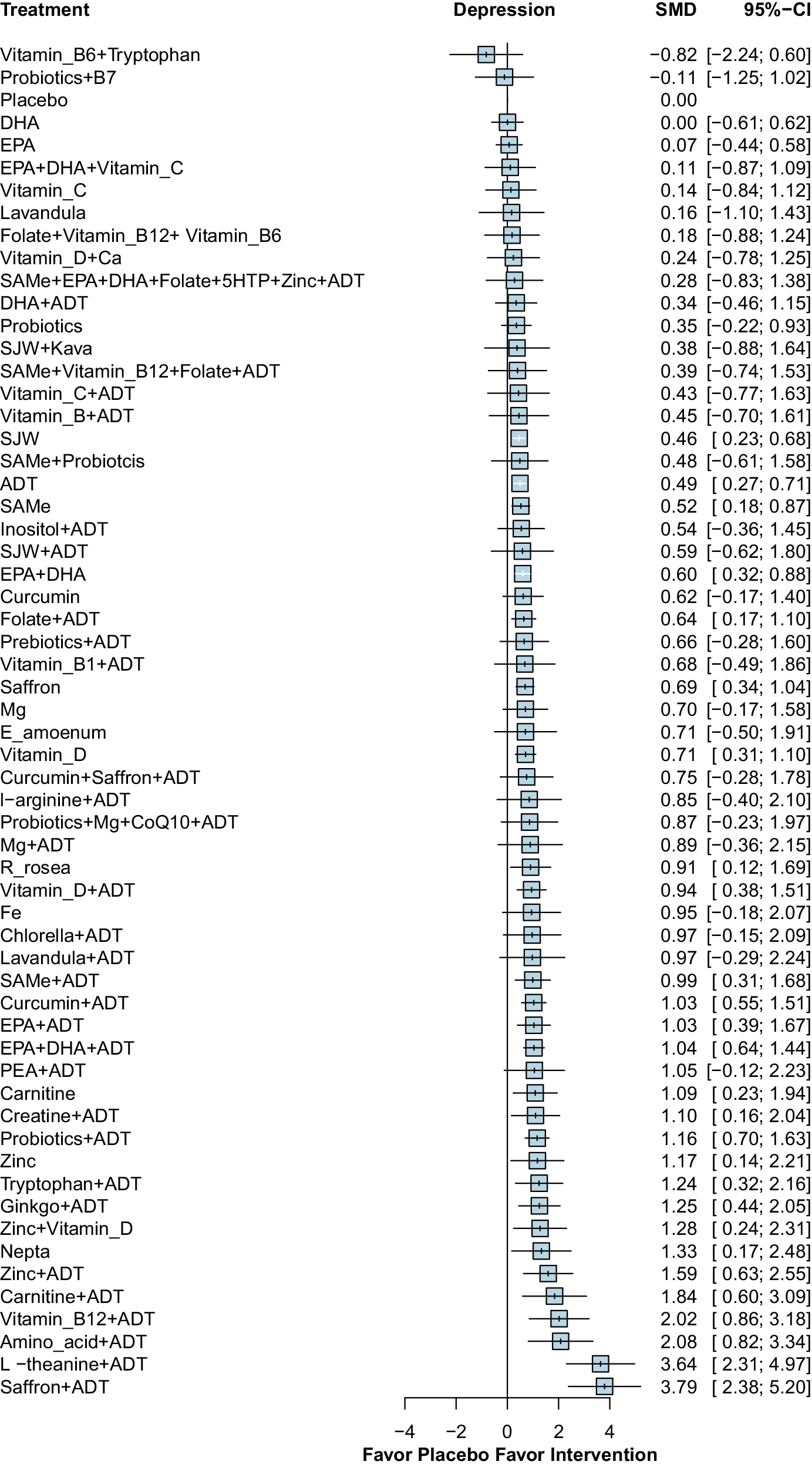
Well this is fascinating. In a meta-review, several supplements ("nutraceuticals") either helped antidepressants work better or, in some cases, worked on their own for adults with depression, with broadly similar side-effect rates to placebo in the trials reviewed.
Abbreviations
- ADT: antidepressant
- DHA: docosahexaenoic acid
- EPA: eicosapentaenoic acid
- NMA: network meta-analysis
- SAMe: S-adenosyl methionine
It has been estimated that approximately 40% of patients have not achieved remission after treatment with multiple ADTs (Rush et al., 2004). Moreover, adverse effects are common in patients receiving ADTs, thus leading to discontinuation of ADT treatment (Bull et al.,2002). Therefore, nutraceuticals are a common alternative (with or without standard ADTs) for patients experiencing emotional disturbances (Firth et al., 2019a). Nutraceuticals are defined as food or part of food that provides health benefits. The use of nutraceuticals among psychiatric patients has increased rapidly (Firth et al., 2019b). Recent studies have demonstrated the potential beneficial effects of nutraceuticals, such as omega-3 fatty acids, S-adenosyl-L-methionine (SAMe), folic acid, and vitamin D, on depression (Freeman et al., 2010, Sarris et al., 2016). Guidelines for prescribing omega-3 fatty acids for depression have also recently been developed, suggesting that 1–2 g of EPA is recommended for adjunctive use in depression (Guu et al., 2019). Additionally, clinical guidelines have indicated that other nutraceuticals such as vitamin D at doses between 1500 and 4000 international units (IU), zinc at dose of 25 mg, and probiotics at doses of 1–10 billion units CFU (colony-forming units) may be effective in the adjunctive treatment of depression (Sarris et al., 2022).
When nutraceuticals were added on top of standard antidepressant drugs (adjunctive use), several combinations consistently outperformed antidepressants alone. In addition, there were four supplements when used without being combined with an antidepressant that were better than antidepressants alone:
- EPA + DHA (omega‑3s)
- SAMe
- Curcumin.
- Saffron.
The paper notes that EPA + DHA, SAMe, and curcumin looked relatively strong whether used alone or added to antidepressants.
Our study suggests that some adjunctive nutraceuticals may offer superior therapeutic efficacy compared with the use of either antidepressants or nutraceuticals alone. As such, prioritizing adjunctive therapy may be beneficial when considering nutraceuticals for the treatment of depression.
For reference, from the list in the table at the top of this post – in addition to my SNRI (duloxetine) – I'm also taking Omega-3s, Creatine, L-Theanine, amino-acids, probiotics, and vitamins. Perhaps I should be taking Saffron and SAMe too...
Source: www.cambridge.org
Are.na block: ↗
Collection: finds-au723pdfugg