
Apocryphal stories
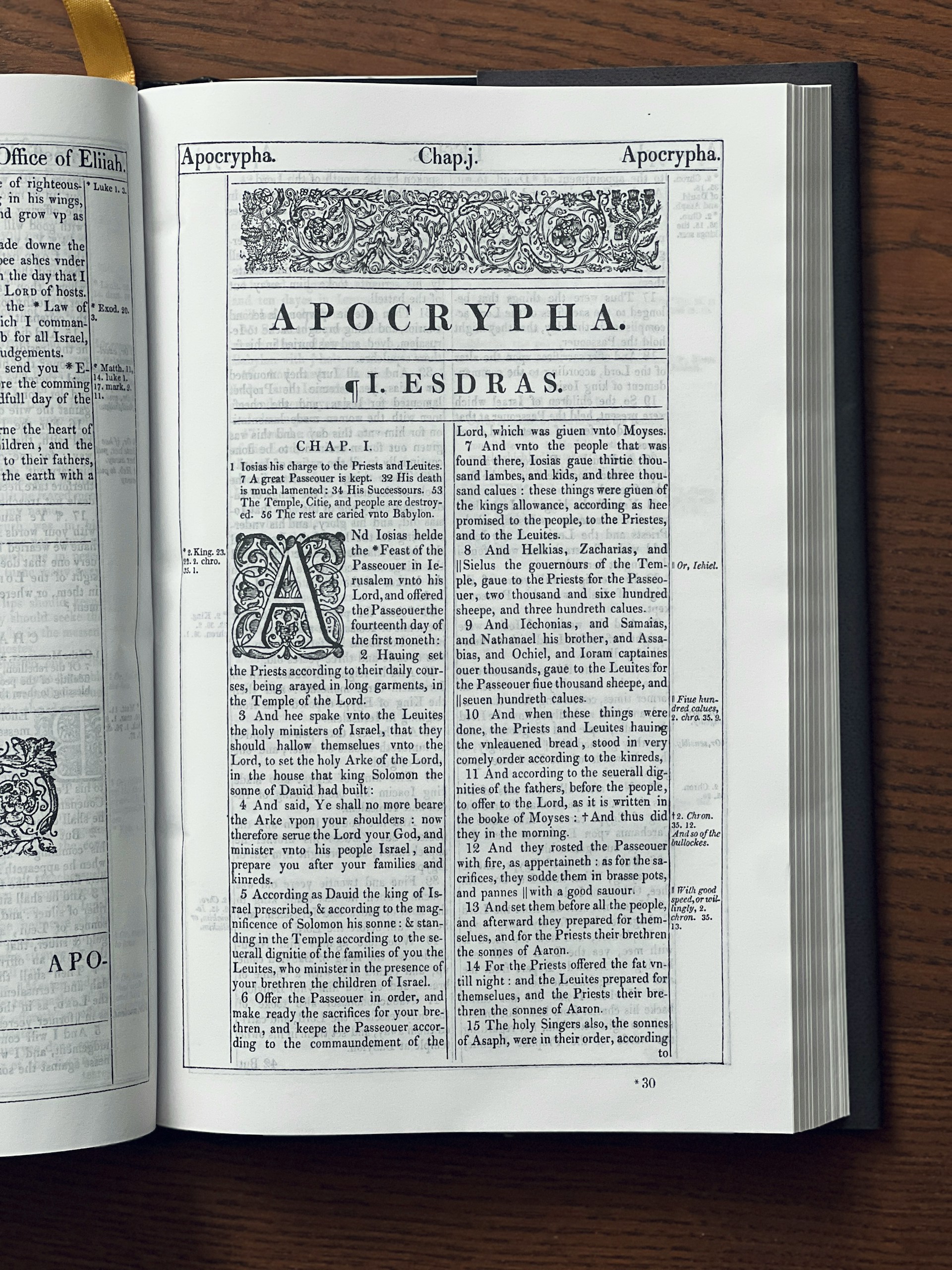
As my mother graduated from a degree in Theology, I've been familiar with the apocrypha from an early age. Some of the stories are cute (Jesus making sparrows out of clay which come to life) while others are wild (St Paul baptising a lion, or a catalogue of punishments visited on sinners in hell).
This post refers to them as being like 'deleted scenes' which isn't really the right analogy at all. It's more like the multiple, conflicting stories in a film like Rashomon .
In the book of Tobit, a highly unfortunate man and woman receive salvation from the angel Raphael, who uses fish guts to cure their physical and demonic afflictions. In the book of Judith, the titular Israelite widow deceives and slays the Assyrian general Holofernes, a scene immortalized by Caravaggio.
[...]
There’s quite a bit more, all of it eventful, none of it universally accepted among the holy texts of Christianity. The peculiar status of the apocrypha dates back to the fourth century, when the scholar Jerome embarked upon a translation of the Bible into Latin. This first required gathering up all extant versions of the book, which didn’t necessarily agree with each other: one, written in Greek, included quite a few more books than the Bible in Hebrew. It was Jerome who, unable to confirm these extra books’ authenticity, labeled them “apocrypha,” placing them in a section that eventually got them regarded as a kind of second canon: “deleted scenes,” as Trelawny puts it, accompanying the feature that is the Bible. As for the extent to which they reflect the auteur’s true vision, that can only be — and remain — a matter of debate.
Source: Open Culture